
CUSTOM BAG SOURCING / BUYER GUIDE

How to Approve a Custom Bag Sample Before Bulk Production

Once bulk fabric is cut, a mistake in dimensions, hardware, or logo color turns into a shipment dispute rather than a quick pattern fix. Before authorizing production, verify that a physical pre-production sample matches your final technical specification and purchase order—not an early prototype, a verbal tweak, or factory photos.

To approve a custom bag sample before bulk production, work through five steps in order:

  • Confirm the sample stage. Make sure you are reviewing a pre-production sample built with bulk-equivalent fabrics, trims, hardware, and branding—not a shape prototype assembled from substitute materials.
  • Audit the physical bag against the tech pack and Bill of Materials (BOM). Measure key reference points, test zippers and buckles under load, inspect stress-point reinforcement, and verify logo placement against approved color references.
  • Check packaging and labeling alongside the bag. Review the inner polybag, warning text, barcode readability, hangtag position, desiccant, and export carton packing method before sign-off.
  • Close the revision log and seal reference units. Record every accepted change in writing and keep matching, signed golden samples with your team and at the factory.
  • Tie the purchase order (PO) to the approved sample and file versions. List the approved sample ID, sign-off date, and final tech pack and BOM revisions in the manufacturing agreement before releasing production.

This sign-off process applies across both OEM and ODM bag manufacturing. Even on an ODM order where you start from a factory’s existing base pattern and only update fabrics, trims, or logos, bulk cutting should wait until the revised pre-production sample is checked in hand.
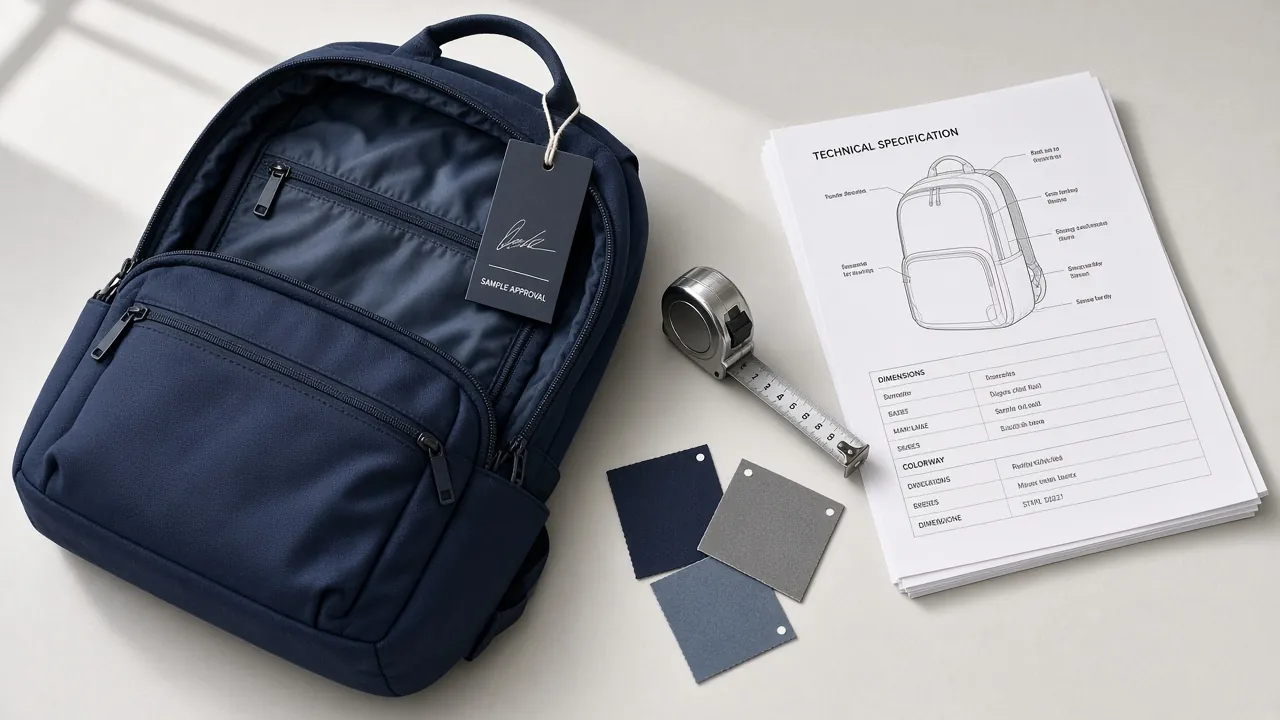
Illustration of a navy custom bag sample (a backpack) on an inspection table with a technical specification sheet, tape measure, and sample approval tag
Illustration: a custom bag sample arranged with a tech pack and measuring tools for physical inspection. This is an illustrative scene, not a factory photograph.

Why the Type of Custom Bag Sample Matters Before You Sign Off

Buyers often assume that any custom bag sample that “looks right” is ready for mass production. Factories make different samples for different jobs, and approving the wrong stage leaves unresolved issues—such as fabric shrinkage, dye-lot variation, or custom hardware tolerances—to surface only after cutting has started.

Two recurring gaps come up in buyer discussions. First, leaving trim and hardware specs open during sampling: in a Reddit r/manufacturing thread on sourcing custom nylon bags, contributors pointed to requesting a pre-production sample and spelling out hardware callouts and a full BOM in the tech pack instead of leaving those decisions to assumption. Second, transferring an existing bag to a new supplier from photos or summary spec sheets alone. As one sourcing note on X about switching factories points out, photos do not show construction density, hand-feel, or packing methods; a new factory needs a physical golden sample and a written packing specification.

Technical specs also have to match commercial reality before sign-off. A factory-side comment on X about detailed tech packs and budgets illustrates the disconnect when a lengthy specification is paired with an unrealistic target cost that cannot be held in bulk. Custom-dyed fabrics, custom molds, and specialized webbings often carry upstream supplier minimums—an important point when reviewing custom bag MOQ factors. Confirm that every material on the approved sample is workable at your order volume. At Voufan Bags, the MOQ is 500 pieces per style, and special oversized bags are quoted separately.

Comparison of Common Custom Bag Sample Types

Sample names vary between manufacturers, so confirm each sample’s stage and material status in writing with your factory before reviewing it.
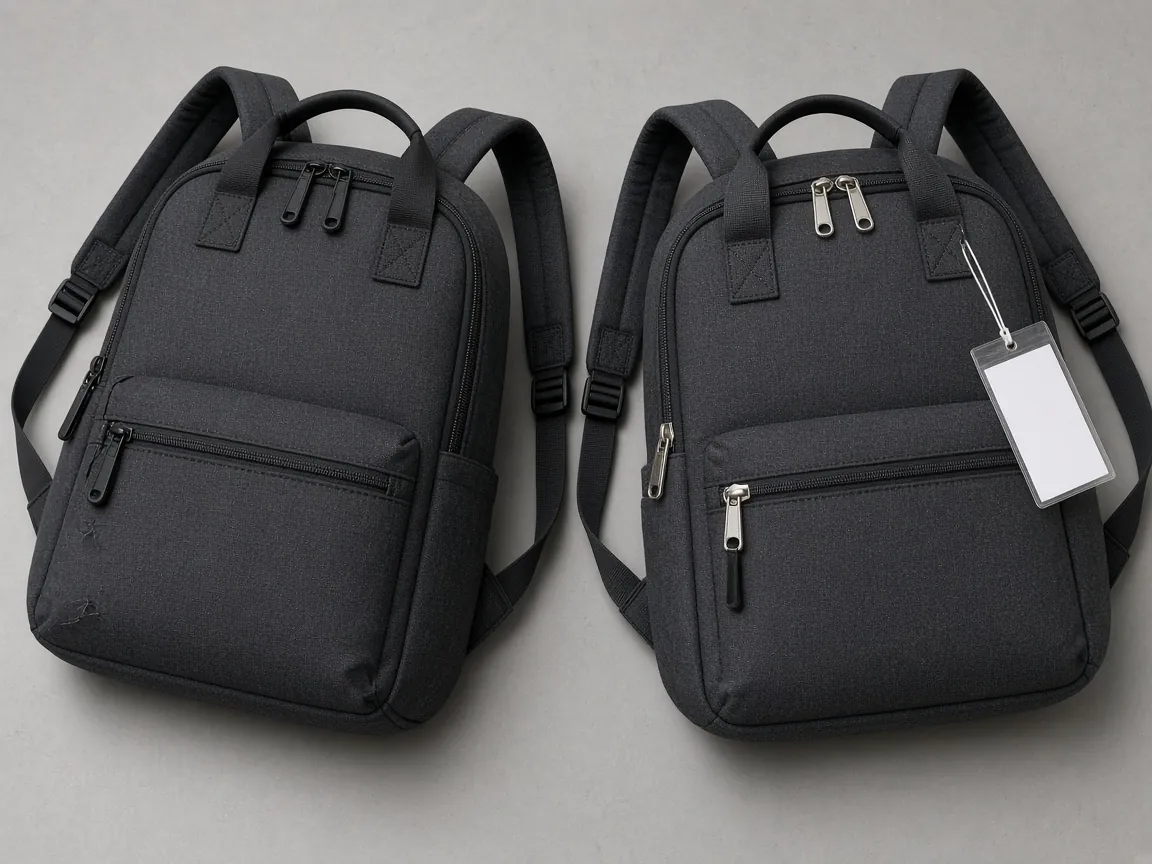
Illustration comparing an early custom backpack prototype with a later pre-production sample that has a reference tag
Illustration comparing an early prototype backpack with a later pre-production sample. This is an illustrative scene, not a factory or test photograph.
Sample stagePrimary purposeTypical materialsWhat the buyer should verifyReady for bulk release?
Development / prototype sampleTest geometry, proportions, pocket layout, and assembly.Stock or substitute fabrics and generic hardware.Silhouette, fit, access, and structure.No. Final materials, colors, and custom trims are not yet verified.
Revision sampleResolve pattern, reinforcement, or dimension changes after first-proto feedback.Closer-to-final fabrics and trims; may include early logo trials.Corrections logged from the first prototype, plus updated measurements.Conditional. Only if final bulk materials are used and no revisions remain.
Pre-production sample (PPS)Validate bulk construction, materials, branding, and packaging before cutting.Final approved fabrics, trims, labels, and retail packaging.Full audit against the final BOM, tech pack, and packing spec.Yes, once signed off in writing with no unverified substitutions.
Golden / sealed reference sampleServe as the physical benchmark during production and inspection.Identical to the approved PPS, tagged and sealed.Buyer and factory hold matching signed, dated units.Yes. This is the physical standard used to judge bulk output.
Top of production (TOP) sampleConfirm the live line matches the sealed reference at the start of the bulk run.Taken from the first bulk units, packed as intended for shipment.Line consistency, presentation, and barcode or carton accuracy.Post-release check. Not a substitute for PPS approval.

Detailed Physical and Documentary Approval Checklist

Inspect the pre-production sample in good light with a measuring tool, the latest tech pack, the BOM, and your color standards in front of you. Reviewing a custom bag sample from memory lets small deviations slip into a 500-piece run. The checks below apply across product types—from multi-compartment packs developed with a custom backpack manufacturer to structured totes and travel bags—and cover both the physical unit and its files.

Dimensions, silhouette, and capacity

  • Measure height, width, and gusset depth at the exact reference points defined in the tech pack, and compare the numbers against the tolerances agreed in writing.
  • Stuff the bag evenly and set it on a flat surface to verify it stands level without twisting or collapsing at the base.
  • Test compartments and sleeves with the actual items they are designed to carry. A pocket that measures correctly flat can still bind once internal foam is sewn in.
  • Measure strap length, adjustment range, and handle drop, then check the carry angle on a person or mannequin.

Outer shell, lining, and interlining

  • Confirm the outer shell and lining match your approved swatches in fiber, weave or denier, backing or coating, and surface treatment.
  • Press through the back panel, straps, base, and dividers to check hidden foam, padding, and stiffeners. Because those layers sit inside the lining, ask the factory to confirm the internal specification in writing or supply unsewn cuttings with the sample.
  • Compare shell fabric, lining, zipper tapes, binding, and webbing against your approved color standards under consistent lighting, and verify whether the sample uses final bulk-dyed fabric or a substitute.

Stitching, seams, and stress points

  • Check stitch density, thread type, and seam tension along visible lines. Look for skipped stitches, loose loops, or needle damage on coated fabrics.
  • Inspect high-load junctions at straps, grab handles, D-ring anchors, and webbing attachments to confirm the bar-tacks, box-and-X stitching, or backing patches specified in the tech pack.
  • Check interior seams for cleanly bound or turned edges, with no fraying or exposed foam.
  • On bags with edge paint or piping, flex the edges and check tight corners for cracking or puckering.

Zippers, hardware, and closures

  • Open and close every zipper repeatedly around curves and corners, checking slider travel, stops, tooth type, and gauge.
  • Pull firmly on each zipper puller to confirm it stays secure.
  • Operate buckles, D-rings, snaps, and hooks repeatedly. Look for sharp burrs, uneven finish, and webbing that slips through adjusters.

Branding, logos, and color accuracy

  • Supply logo artwork in vector format (.AI, .EPS, or editable .PDF) with exact color codes rather than screenshots or low-resolution images; as noted in a production tip on X about bag color mismatches, unclear artwork files and vague color references often lead to off-shade bulk branding.
  • Measure logo placement from the agreed seams and check that it sits level when the bag is filled.
  • For sewn patches or metal plates, inspect stitch neatness and backing security. For prints or heat transfers, gently stretch and rub the surface to test adhesion.

Functional load and cleanliness

  • Load the sample with realistic contents, lift it by the grab handle, and adjust the straps under weight to see whether webbing slips or panels pull out of shape.
  • Check for harsh chemical odor when the polybag is first opened, and inspect the interior and exterior for marks, stray threads, or adhesive residue.

Packaging, barcodes, and documents
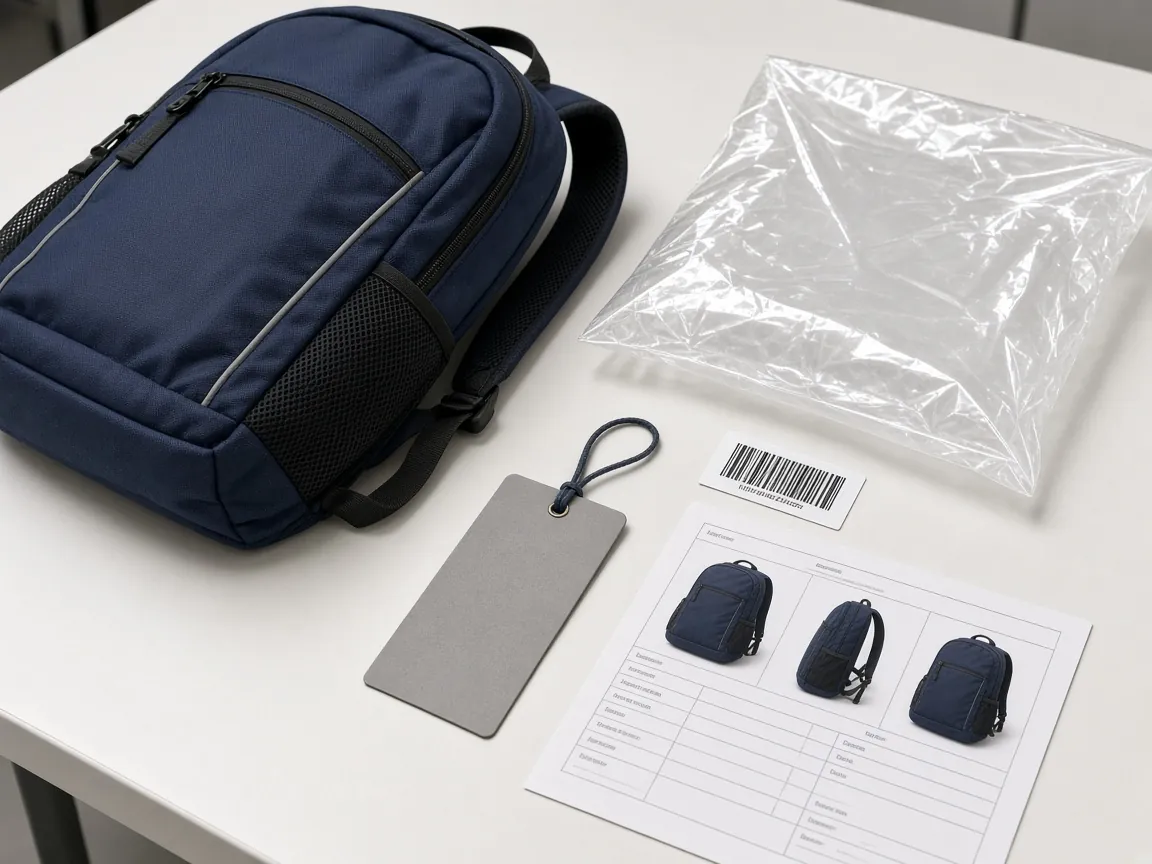
Illustration of a custom backpack sample beside a polybag, hangtag, barcode label, and packing specification sheet
Illustration of packaging materials reviewed with a custom bag sample, including a polybag, hangtag, and barcode label. This is an illustrative scene, not a factory shipment photograph.
  • Verify polybag quality, required warning text, hangtag placement, protective stuffing, and desiccant position.
  • Check care labels, country-of-origin labels, and barcodes, and scan every barcode to confirm it reads accurately and matches the intended SKU.
  • Reconcile the physical bag with the final tech pack, BOM, and quotation. Even a minor change you decide to keep should be updated in the files so the documents and sample match.

How to Record Approval and Lock Your Purchase Order

A casual reply like “Sample looks good, go ahead with bulk” leaves too much room for dispute if bulk goods arrive off-spec. Put the approval on record before cutting starts—especially in private label bag manufacturing, where repeat orders depend on holding a consistent benchmark.

Keep a written evaluation and revision log

Write a dated evaluation for each sample round. Mark every measurement, material, trim, and construction detail as approved or needing correction, supported by annotated photos. Maintain a revision log inside the tech pack so neither side pulls an outdated file.

Seal two identical golden reference samples

Before bulk cutting begins, both sides need an identical, fully approved pre-production sample:

If one minor, clearly defined tweak remains, confirm in writing whether you require a revised physical sample or will check the correction on a TOP sample from the first bulk units. Do not leave conditional sign-offs open-ended when structure, main fabric, or logo execution still has to change.

  • Buyer reference sample: Kept by your team or an inspection partner, with a signed, dated tag attached to a permanent part of the bag.
  • Factory counter-sample: Held at the factory so production and QC staff can compare bulk work directly against the physical standard.

Reference the sample and file versions on your PO

Your purchase order or manufacturing agreement should tie bulk production to both the sealed sample and the final technical files. Include:

When assessing how to find a reliable custom bag manufacturer, watch how clearly a factory tracks sample feedback, updates BOMs, and handles counter-samples. Those habits show how disciplined bulk production is likely to be.

  • Approved sample reference: Sample ID or tag number, approval date, and any seal or shipment reference.
  • Approved technical documents: Exact file names and revision numbers for the final tech pack, BOM, artwork, and packing specification.
  • No unapproved substitutions: Fabric, lining, foam, zipper, hardware, thread, or packaging cannot be swapped without prior written authorization.
  • Inspection and acceptance criteria: Tolerances, defect classifications, or pre-shipment inspection arrangements must be confirmed in writing and referenced on the PO.

Frequently Asked Questions

Can I approve bulk production from photos and videos on a tight deadline?

Photos and videos help catch obvious errors before a custom bag sample is shipped, but they cannot show hand-feel, foam density, odor, zipper glide, or true color. Final sign-off before bulk cutting should be made on a physical pre-production sample.

Record the exact change in your revision log with annotated photos and updated measurements. If the change is minor and low-risk, confirm in writing whether the factory will update its counter-sample and send a TOP sample or verification photos from the first bulk units. If the change affects dimensions, pattern, foam, zipper gauge, or main fabric, request a revised physical sample before cutting starts.

At the first prototype stage, custom-dyed fabrics or custom hardware often have not been made yet because upstream suppliers require bulk minimums. Factories commonly build the first pattern check with stock fabrics and similar trims. Before you approve a custom bag sample before bulk production, confirm in writing that the pre-production sample uses bulk-equivalent materials.

Both sides should hold matching units. In the final round, request two identical pre-production samples, sign and tag both, keep one with your team or inspection partner, and leave the sealed counter-sample at the factory.

At Voufan Bags, the MOQ is 500 pieces per style, and special oversized bags are quoted separately. Confirm order volume, colorways, and material choices during sampling so the pre-production sample stays aligned with bulk production.

Next Steps for Your Custom Bag Order

Voufan Bags is a Shenzhen-based OEM and ODM bag manufacturer established in 2008. If you have a tech pack, BOM, or reference sample ready for quotation and sampling, contact Voufan Bags to discuss your specifications.

Scroll to Top