
How to Find a Reliable Custom Bag Manufacturer
Finding a reliable custom bag manufacturer is one of the most important sourcing decisions a brand will make. The right factory partner can help you launch a product on time, protect your margins, and give you consistent quality order after order. The wrong one can cost you months of delay, a warehouse full of bags that don’t match your sample, and a damaged relationship with your own customers.
This guide is written from the perspective of a factory that produces custom bags for outdoor brands, Amazon sellers, medical suppliers, pet product companies, and private label importers every day. It walks through exactly what to check before you commit to a custom bag manufacturer, so you can make a sourcing decision based on evidence, not marketing promises.
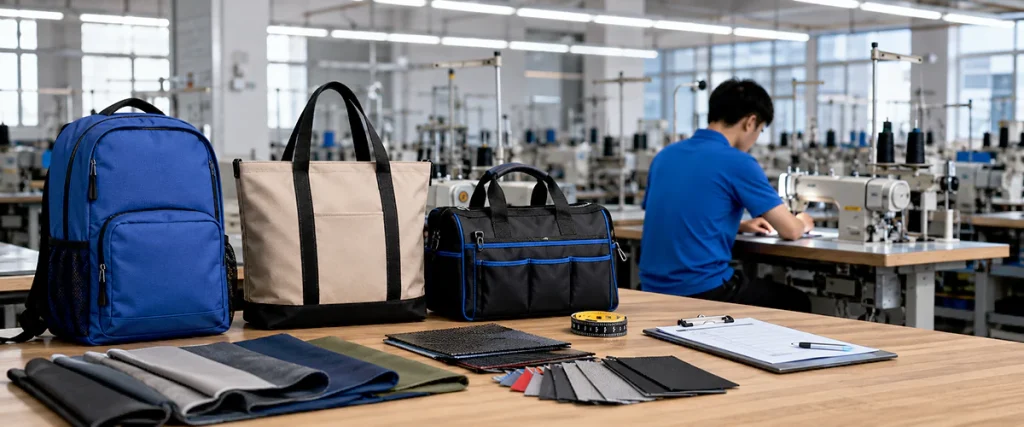
Why Choosing the Right Custom Bag Manufacturer Matters
A bag is not a commodity item once your logo, structure, and brand identity are on it. Every custom bag order involves tooling, sample rounds, material sourcing, and a production schedule that your own launch date depends on. If a factory gets the specifications wrong, ships late, or cuts corners on materials, the cost isn’t limited to the order itself — it extends to your marketing spend, your retail or Amazon listing timeline, and the trust your own customers place in your brand.
Many buyers only discover a factory’s weaknesses after the first bulk shipment arrives. By then, the sample was approved, the deposit was paid, and there’s little room to fix the problem before the container leaves the port. That’s why supplier evaluation has to happen before the first purchase order, not after.
What Makes a Custom Bag Manufacturer Reliable?
Reliability isn’t about who quotes the lowest price or replies the fastest. It comes down to a few concrete factors that you can actually verify:
- Relevant production experience in your specific bag category
- Real OEM and ODM capability, not just a sales team relaying quotes from subcontracted factories
- Transparent MOQ and pricing, with cost drivers explained rather than hidden
- A structured sampling process with sample approval before bulk production
- Documented quality control at cutting, sewing, and pre-shipment stages
- Realistic lead times, communicated honestly even when they’re not what you want to hear
- Clear, responsive communication from a dedicated contact, not a rotating cast of reps
As a custom bag manufacturer, a reliable factory should help buyers reduce sourcing risk before bulk production starts — not after the deposit is paid.
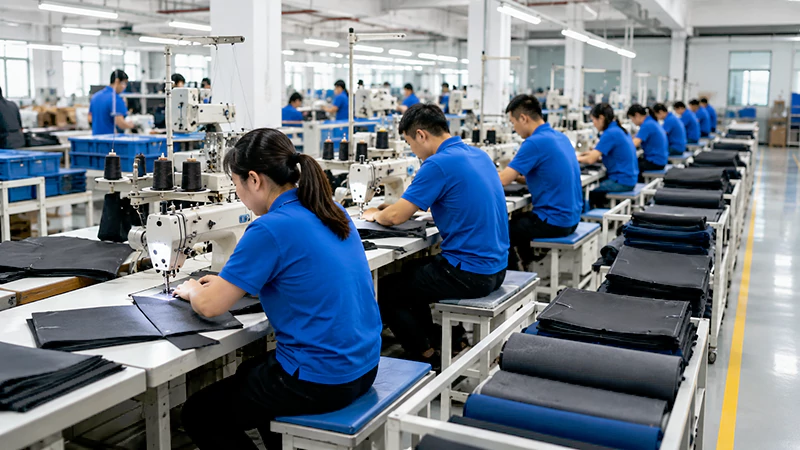
Step 1 – Check the Manufacturer's Product Experience
Not every bag factory can produce every type of bag well. A supplier that mainly makes shopping totes will not automatically have the pattern-making, waterproof seam-taping, or load-bearing strap engineering needed for a running hydration vest or a climbing bag. Ask directly:
- How many years has the factory produced this specific bag category (outdoor, medical, pet, tool, cooler/delivery)?
- Can they show past projects, not just stock catalog photos?
- Do they understand the functional requirements of your product — waterproofing, ventilation, load distribution, temperature retention?
A factory with direct experience in your category will ask you better technical questions during the quoting stage. That’s usually a stronger signal of competence than a fast, generic quote.
Step 2 – Review OEM and ODM Customization Capabilities
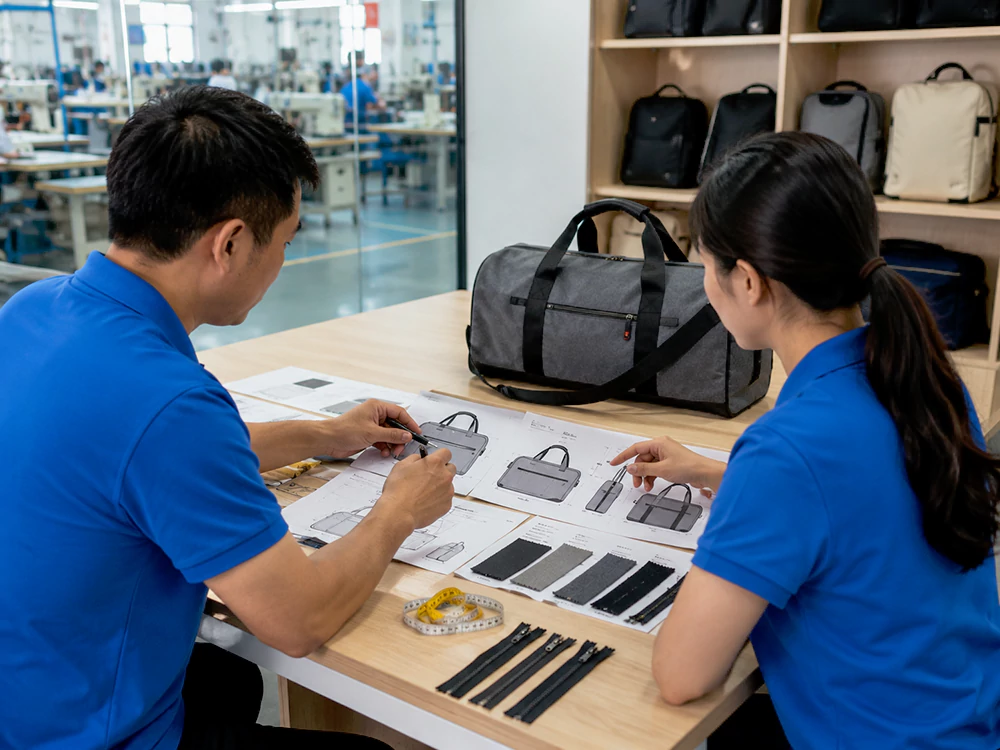
OEM (Original Equipment Manufacturer) means the factory builds your bag exactly to your own design and specifications. ODM (Original Design Manufacturer) means the factory contributes design and structural development, working from your concept, target market, and budget to develop something ready for production.
A capable OEM ODM bag supplier should be able to support both models:
- Full OEM production from your finished tech pack
- ODM development support when you only have a concept, reference product, or performance requirement
- Structural adjustments — compartment layout, padding, strap systems, closures — based on real production feasibility, not just design software
If a factory can only reproduce exactly what you send with no technical feedback, that limits your ability to catch design flaws before they become expensive tooling mistakes.
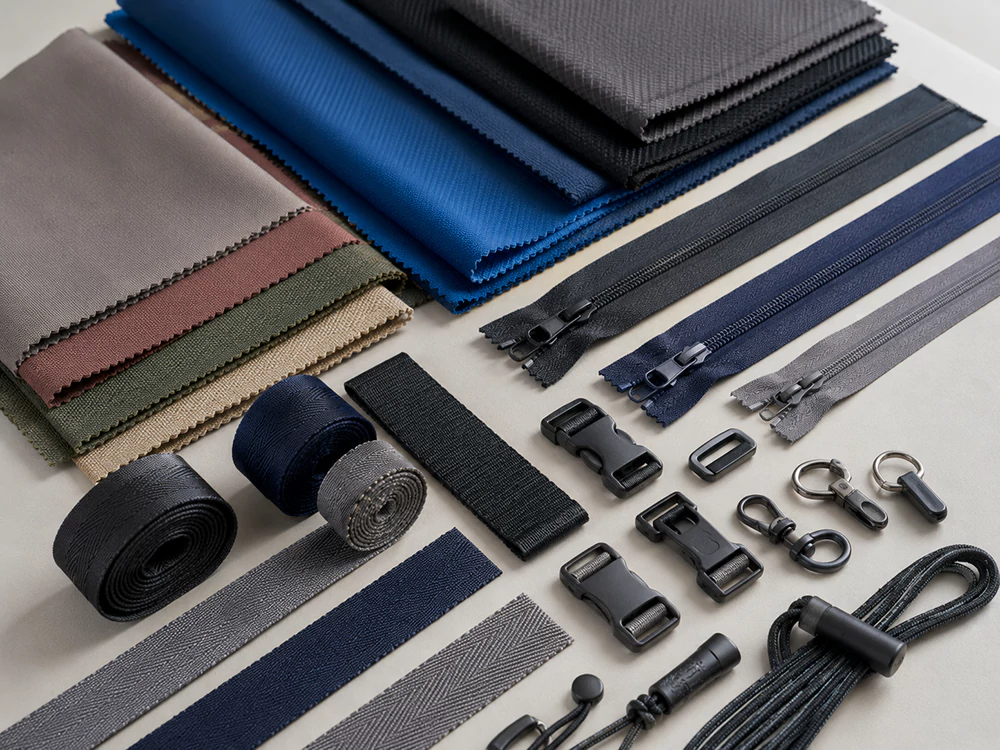
Step 3 – Evaluate Materials, Components, and Technical Knowledge
Material selection affects durability, cost, and how your product performs in the field. A reliable custom bag manufacturer should be able to explain trade-offs, not just supply whatever is cheapest.
| Material / Component | Common Use | Key Property |
|---|---|---|
| Polyester (600D, 900D) | General bags, backpacks | Cost-effective, durable |
| Nylon (420D, 1000D Cordura) | Outdoor, tactical bags | High abrasion resistance |
| Oxford fabric | Totes, everyday bags | Tight weave, water-resistant |
| Canvas | Casual/lifestyle bags | Structured, natural look |
| rPET | Eco-conscious brands | Recycled, sustainability positioning |
| TPU laminated fabric | Waterproof/dry bags | Fully waterproof seams |
| EVA / EPE / PE foam | Cases, padded protection | Impact resistance, structure |
| Mesh | Ventilated panels, pockets | Breathability |
| Webbing, buckles, zippers | Straps, closures | Load-bearing, functional hardware |
A factory that can explain why a certain fabric or zipper type fits your use case — not just sell you the cheapest option — is showing real technical knowledge. This is especially important for performance categories like custom outdoor sports bags, where material choice directly affects durability and function.
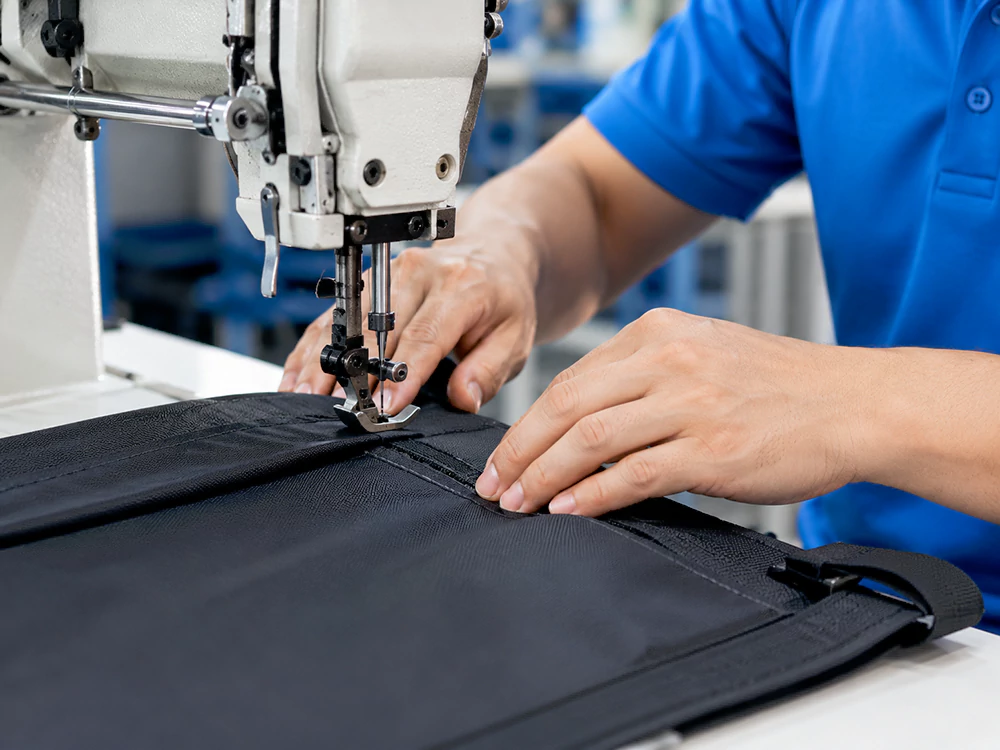
Step 4 – Understand MOQ, Pricing, and Cost Transparency
Custom bag MOQ (minimum order quantity) typically starts around 300 pieces, though it varies depending on material, color count, logo method, and structural complexity — one of the most common cost questions buyers have when sourcing custom bags overseas. Simpler designs with standard materials can sometimes go lower…
Pricing should be broken down, not just quoted as a single number. Ask what’s included:
- Fabric and hardware cost
- Labor and construction complexity
- Logo/branding method
- Packaging
- Tooling or mold cost (if applicable)
- Shipping terms (see Step 10)
The lowest price is not always the safest choice. A quote significantly below others in the market usually means a compromise somewhere — thinner fabric, weaker stitching density, unbranded hardware, or a shortcut in QC. It’s worth asking a low-quote factory directly how they’re achieving that price.
Step 5 – Check the Sampling and Prototyping Process
Never approve a bulk order without a physical sample. A structured bag sampling process typically looks like this:
- You provide a tech pack, reference product, or concept
- The factory confirms materials, dimensions, and construction details
- A sample is produced — 5–7 working days for simple designs, longer for complex structures with multiple compartments or waterproofing
- You review, request adjustments if needed, and approve the final sample
- Bulk production begins only after sample sign-off
Skipping sample approval — or accepting “photos only” instead of a physical unit — is one of the most common causes of failed bulk orders.
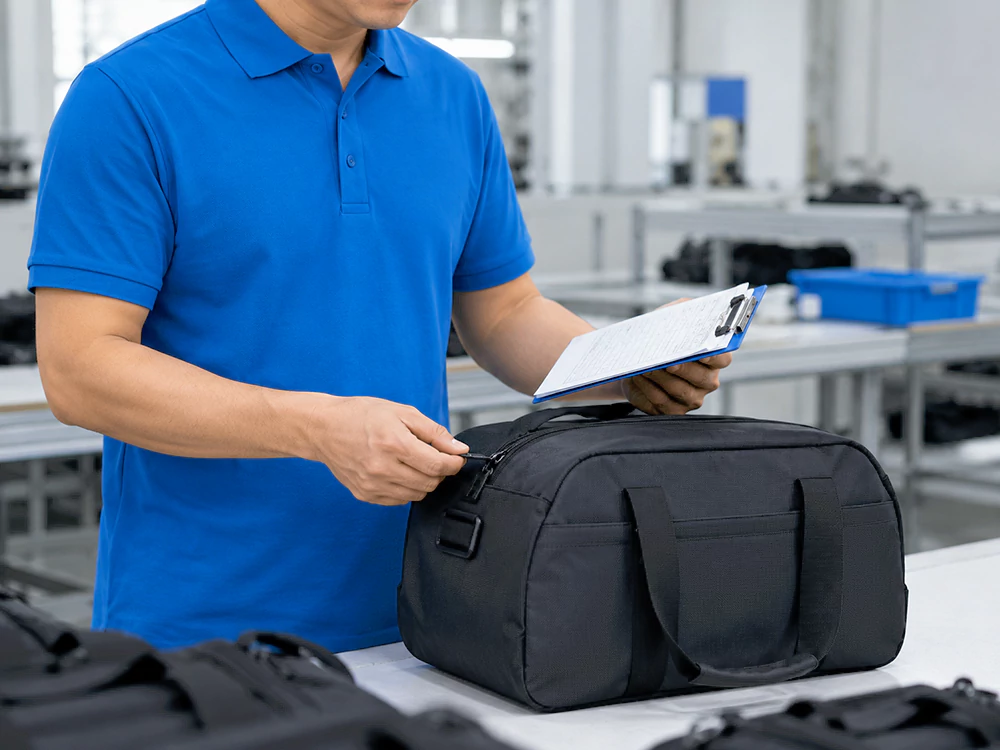
Step 6 – Review Quality Control and Inspection Standards
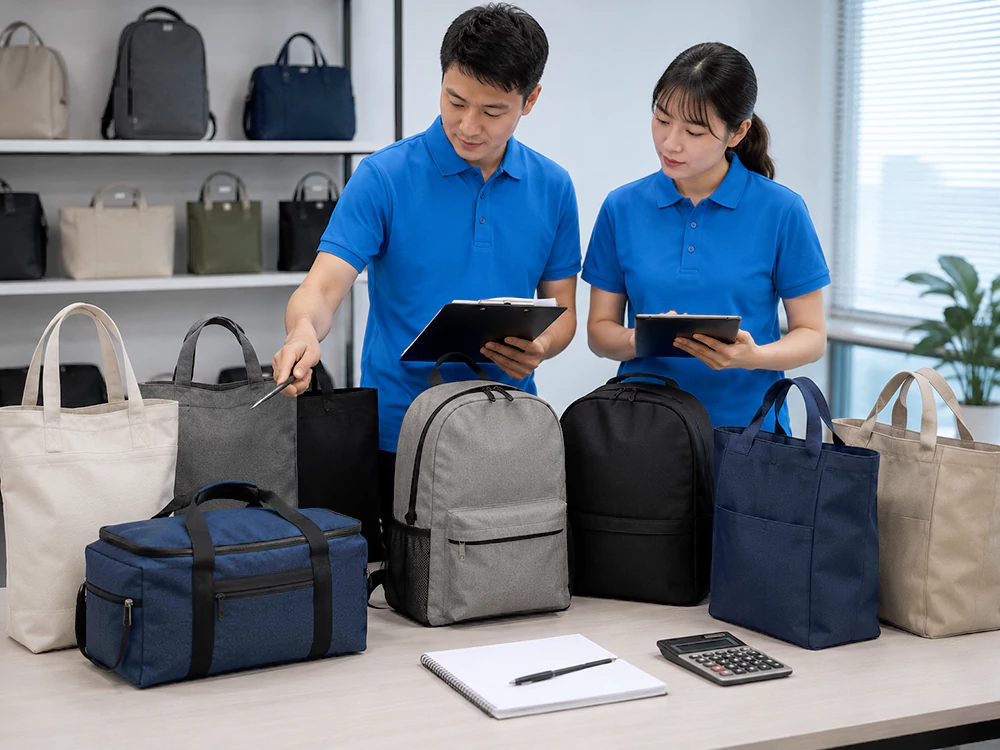
Bag quality control should happen at multiple stages, not just at the end. Ask what a factory checks during:
- Cutting stage: material consistency, pattern accuracy
- Sewing stage: stitching density, seam strength, zipper function
- Assembly stage: logo placement, dimension tolerance, hardware attachment
- Pre-shipment stage: full packing check, random sampling against the approved sample
A factory that can describe specific inspection points — rather than a vague “we have strict QC” — is more likely to actually run one.
Step 7 – Confirm Production Capacity and Lead Time
Ask about actual production line capacity for your order size, not just a general lead-time estimate. This matters most for time-sensitive categories like commercial cooler and delivery bags, where launch timing and seasonal demand make delays especially costly. Lead times that sound too fast for your order volume are often optimistic quotes rather than realistic schedules. It’s reasonable to ask:
- How many units can be produced per week for this design?
- Are there other orders ahead of mine in the queue?
- What happens if a material is delayed — is there a backup supplier?
Step 8 – Evaluate Communication and Project Management
Production problems are inevitable at some point — a material delay, a component substitution, a shipping schedule change. What matters is how the factory communicates when something goes wrong. Look for:
- A dedicated contact person, not a different rep every time
- Clear, professional English communication
- Proactive updates during production, not just when you ask
- Willingness to discuss problems directly instead of going silent
Step 9 – Check Packaging, Labeling, and Private Label Support
If you’re building your own brand, your custom bag manufacturer should support private label development beyond just sewing the bag. Common logo methods include:
- Woven label
- Rubber patch
- Embroidery
- Silk screen printing
- Heat transfer
- Leather patch
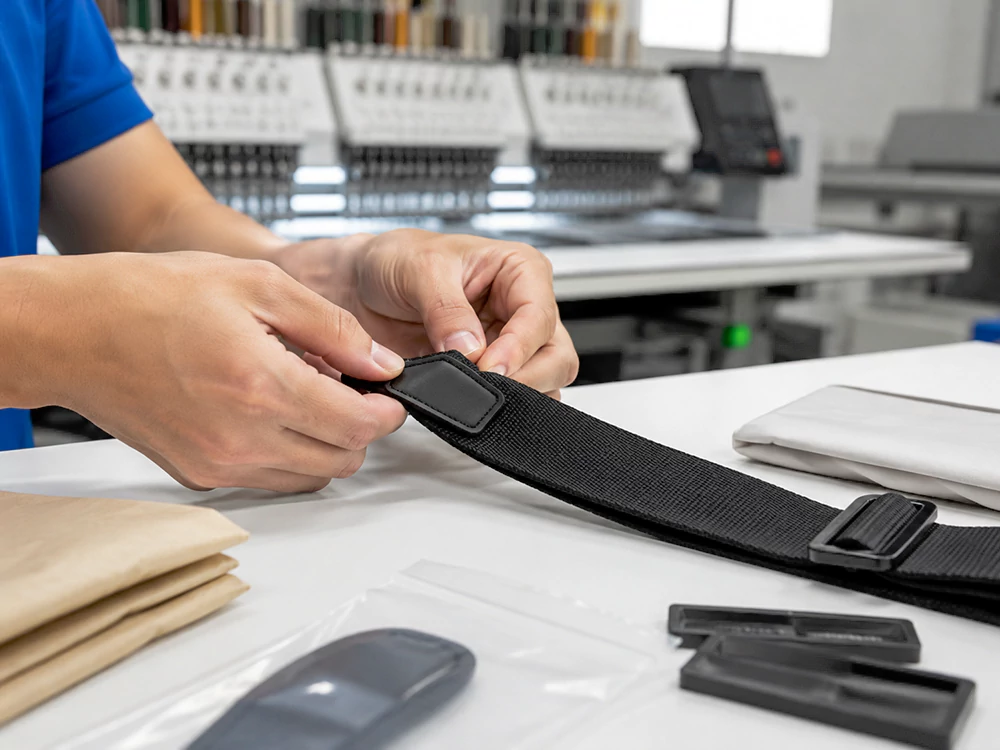
Packaging support should also cover poly bags, hang tags, branded cartons, and retail-ready packaging if needed. A private label bag manufacturer that can guide you through logo placement and packaging options — rather than just asking “send us your artwork” — reduces the guesswork on your side. This is especially valuable for brand-focused categories such as custom pet carrier bags, where packaging often doubles as retail shelf presentation.
Step 10 – Understand Shipping Terms and Export Experience
Shipping terms affect your landed cost and who’s responsible for freight, insurance, and customs at each stage:
| Term | Meaning | Who Handles Main Freight |
| EXW (Ex Works) | Buyer picks up from factory | Buyer |
| FOB (Free on Board) | Factory delivers to port, loads on vessel | Buyer (from port onward) |
| CIF (Cost, Insurance, Freight) | Factory covers freight and insurance to destination port | Factory (to destination port) |
| DDP (Delivered Duty Paid) | Factory handles everything, including duties | Factory (door to door) |
An experienced bag manufacturing company should be able to explain which term fits your situation and coordinate with freight forwarders on export documentation without confusion. This matters even more for specialized products like protective cases and specialty bags, which may require additional customs classification or packaging for safe transit.
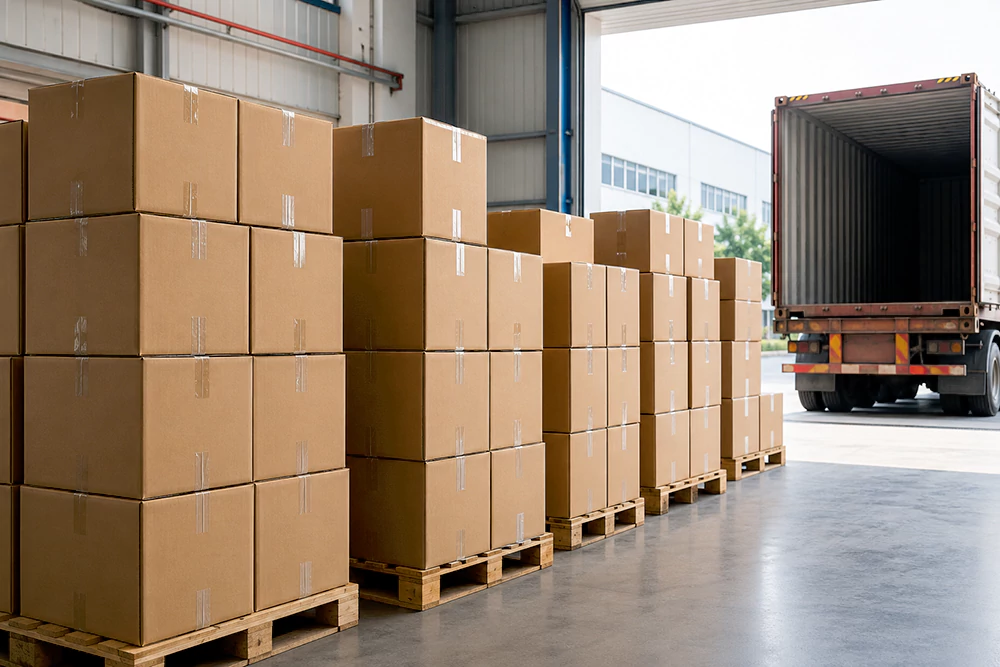
Red Flags When Choosing a Custom Bag Manufacturer
These warning signs apply across every bag category — from tool bags and equipment cases to outdoor gear — and are worth checking before you commit to any bulk order.
- No samples offered — asking you to approve based on photos or renderings only
- Vague pricing — a single number with no breakdown, or prices that change after deposit
- No QC documentation — can’t describe or show any inspection process
- Unrealistic lead times — promises that don’t match your order volume
- Poor or inconsistent communication — slow replies, different answers from different reps
- Reluctance to discuss materials in detail — avoids technical questions about fabric or components
- No export documentation experience — unfamiliar with shipping terms or customs paperwork
Questions to Ask Before Placing a Bulk Order
- How long have you produced this specific bag category?
- What is the MOQ for this design, and what changes it?
- What is your standard sample lead time?
- What logo/branding methods do you support?
- What QC checks happen before shipment?
- What is your realistic production lead time for my order volume?
- Who will be my main point of contact during production?
- What shipping terms do you support, and do you handle export documentation?
- What happens if a material is out of stock — is there a backup plan?
- Can I get references or examples from similar past orders?
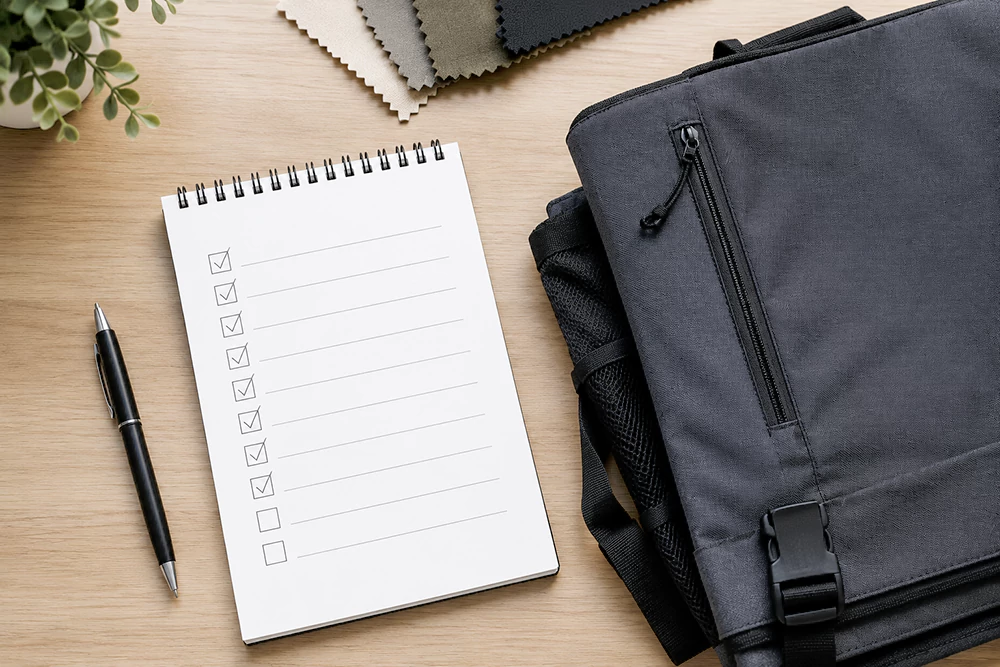
Reliable Custom Bag Manufacturer Checklist
Use this checklist to evaluate any supplier — including for specialized categories like medical and healthcare bags, where material safety and precision stitching matter even more.
Direct experience in your bag category
Real OEM and ODM support, not just reproduction
Clear MOQ with explained cost drivers
Structured sample process with physical sample approval
Documented multi-stage QC
Realistic, honestly communicated lead times
Dedicated, responsive contact person
Private label and packaging support
Clear shipping terms and export documentation experience
Transparent, no hidden cost changes after deposit
Comparison Table: Reliable Custom Bag Manufacturer vs. Risky Supplier
| Factor | Reliable Manufacturer | Risky Supplier |
|---|---|---|
| Samples | Physical sample before bulk order | Photos/renderings only |
| Pricing | Itemized, transparent | Single number, no breakdown |
| MOQ | Clearly explained, tied to real cost factors | Vague or constantly changing |
| QC | Documented, multi-stage | Undefined or “trust us” |
| Communication | Dedicated contact, proactive updates | Slow, inconsistent, rotating reps |
| Lead Time | Realistic, matched to order volume | Overpromised, frequently missed |
| Shipping | Understands EXW/FOB/CIF/DDP, handles docs | Confused by export terms |
Final Thoughts: Build Long-Term Supply Chain Confidence
Reliability isn’t proven by a single order — it’s proven by consistency over time. A good first experience with sample development, honest pricing, and clear QC is a strong signal, but the real test is whether a custom bag manufacturer delivers the same quality and communication on your second, fifth, and twentieth order.
Working through the steps in this guide — checking product experience, OEM/ODM capability, materials, MOQ, sampling, QC, lead time, communication, packaging, and shipping — gives you a factual basis for choosing a supplier, rather than relying on a sales pitch.
Frequently Asked Questions
How do I find a reliable custom bag manufacturer?
Start by checking the factory’s experience in your specific bag category, then request a physical sample before committing to a bulk order. A reliable custom bag manufacturer will explain MOQ and pricing clearly, describe their QC process in detail, and communicate honestly about lead times rather than overpromising.
What makes a bag manufacturer reliable?
Reliability comes from consistency: relevant production experience, transparent pricing, a structured sampling process, documented multi-stage quality control, realistic lead times, and responsive communication. A custom bag manufacturer that can explain these processes in detail — not just quote a price — is generally more trustworthy.
What is the typical MOQ for custom bags?
Custom bag MOQ is typically around 300 pieces per design, though it can vary based on material, color count, logo method, and structural complexity. Simpler designs may allow lower MOQs, while highly customized structures usually require higher minimums to justify tooling and material costs.
Can I add my own logo to custom bags?
Yes. Most custom bag manufacturers support several logo methods, including woven labels, rubber patches, embroidery, silk screen printing, heat transfer, and leather patches. The right method depends on your material, budget, and desired durability.
What is the difference between OEM and ODM bag manufacturing?
OEM means the factory produces your bag exactly to your own design and specifications. ODM means the factory contributes design and structural development based on your concept or reference product. A capable OEM ODM bag supplier should offer both options depending on how developed your design already is.
How long does bag sample development take?
Simple sample designs typically take 5–7 working days. More complex structures — multiple compartments, waterproofing, or custom hardware — take longer. Bulk production should only begin after the sample is reviewed and approved.
How long does bulk production take?
Production lead time depends on order volume, material availability, and factory capacity, and can range from a few weeks to two months or more for large or complex orders. A reliable custom bag manufacturer will give a realistic timeline based on your specific order rather than a generic estimate.
How is quality control handled during custom bag production?
Quality control should happen at multiple stages: material and cutting checks, in-line sewing checks for stitching and seam strength, and a final pre-shipment inspection covering dimensions, logo placement, and packing. Ask any custom bag manufacturer to describe these checkpoints specifically.
Why isn't the lowest price always the best choice?
A significantly lower quote usually reflects a compromise somewhere — thinner fabric, reduced stitching density, unbranded hardware, or limited QC. It’s worth asking a low-priced factory directly how they’re achieving that cost before assuming it’s simply a better deal.
What shipping terms do custom bag manufacturers use?
Common terms include EXW (buyer arranges pickup and freight), FOB (factory delivers to port), CIF (factory covers freight and insurance to destination port), and DDP (factory handles delivery and duties door to door). An experienced bag manufacturing company should be able to explain which term fits your order.
Not sure what a fair MOQ or price range looks like for your design? Send us your specs and we’ll walk you through the real cost breakdown.
Ready to Work With a Custom Bag Manufacturer You Can Rely On?
Whether you’re developing a new outdoor product line, launching a private label bag on Amazon, or scaling up an existing design, we can walk you through MOQ, sample timelines, material options, and logo customization for your project — with clear answers, not sales pressure.
Tell us about your project and we’ll get back to you with MOQ, pricing guidance, and sample timeline within 1–2 business days.