
OUTDOOR BACKPACK MATERIALS / OEM BUYER GUIDE
Best Materials for Outdoor Backpacks
The best materials for outdoor backpacks depend on the load, the weather and the price point, but most OEM programs land in one of three places. Value and print-led lines: 600D–900D PU-coated polyester. Hiking and travel packs that take real abrasion: 500D–1000D high-tenacity nylon, often with a 1000D or 1680D base. Ultralight or waterproof-led packs: ripstop nylon, X-Pac® laminate or Dyneema® composite. Whatever you pick has to be specified, sampled and repeated across production lots.
This guide covers eight shell options: coated polyester, high-tenacity nylon (for example CORDURA® fabric), ripstop, ballistic-style weaves, Dyneema® composites, X-Pac® laminates, recycled polyester (rPET) and canvas. For each one we look at where it fits, what it costs you in weight and price, and what to check on the sample. We also keep fabric-panel results apart from finished-bag results. A coated nylon panel can pass a hydrostatic test while water still gets in through stitch holes, coil zippers and webbing slots.
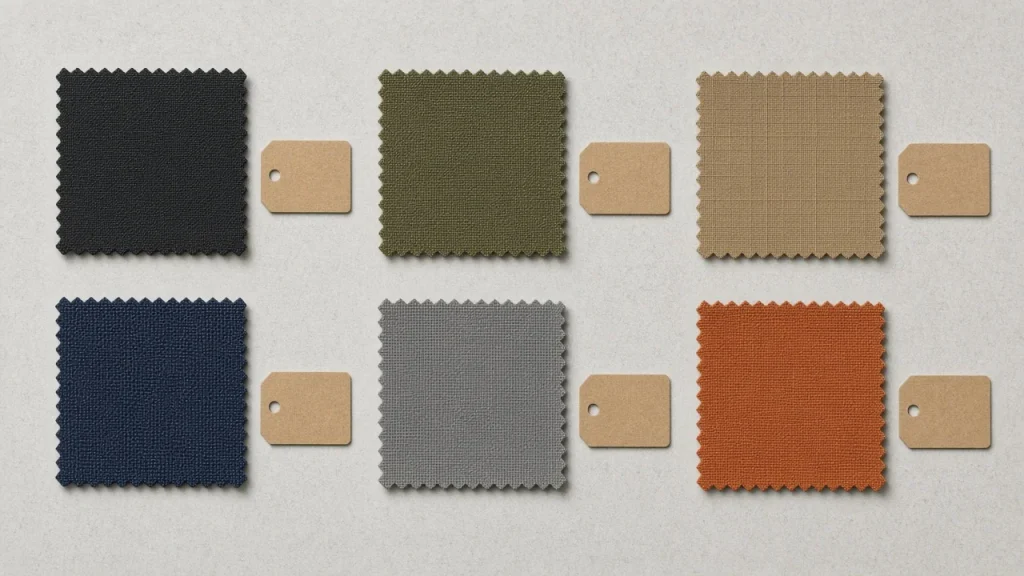
Fabric performance vs finished-bag performance
Keep these four layers apart on the spec sheet:
| Layer | What it describes | Typical evidence |
|---|---|---|
| Face fabric + yarn | Denier, fibre (nylon/polyester/UHMWPE), weave (plain, ripstop, ballistic) | Mill TDS, fibre brand callout |
| Finish / coating / laminate | DWR, PU, PVC, TPU film, multi-layer laminate | Coating weight, film type, fabric hydrostatic result |
| Bag construction | Seams, zipper type, taped or welded joints, pocket openings | Loaded rain check, agreed finished-bag method |
| Assembled durability | Strap anchors, base abrasion, handle pull | Sample use with intended contents; optional lab tests on the bag |
ISO 811 and AATCC TM127 measure fabric resistance to water under hydrostatic pressure. They do not, by themselves, prove a backpack is waterproof. Spray / surface beading tests (for example AATCC TM22) assess DWR behaviour and are not interchangeable with hydrostatic results.
Abrasion methods also differ. ISO 12947 (Martindale) and ASTM D3884 (Taber rotary platform) use different mechanics. Cycle counts from one method should not be treated as equal to the other, and laboratory abrasion is only one input into field durability. For how to scope a water or durability claim before testing, see outdoor gear trends for custom bag buyers.
How to Choose the Best Materials for Outdoor Backpacks
Use this table to narrow down the shell fabric. Then confirm the exact mill style, coating and colour process on the quotation.
| Intended use / channel | Starting shell direction | Prefer when… | Usually avoid when… | Watch during sampling |
|---|---|---|---|---|
| Entry outdoor / promo daypack, broad wholesale SKUs | 600D polyester + PU; stock colours | Price, printability, and colour availability matter more than ultra-light weight | Trail abrasion is severe or “waterproof” is a finished-product claim | Print clarity, coating smell/hand, base panel wear |
| Everyday hiking / travel pack (mid tier) | 900D polyester or 500D high-tenacity nylon; reinforced base | Need denser hand and better abrasion without laminate cost | Weight target is aggressive | Loaded strap pull, zipper run, base scrape |
| Heavy abrasion (airport floors, gear haul, equipment packs) | 1000D nylon (e.g. CORDURA® Classic fabric) or 1680D ballistic-style polyester on base/high-wear zones | Structure and abrasion dominate retail value | Ultralight hiking positioning | Stiffness, sewing thick layers, freight weight |
| Ultralight technical hiking | Ripstop nylon or UHMWPE / Dyneema® composites; sometimes X-Pac® laminates | Strength-to-weight and low water pickup are what the product sells on | Budget lines or many Pantone colourways | Needle holes, seam design, hardware compatibility |
| Wet-weather positioning (rain, splash) | Coated fabric + reviewed closures; TPU or laminate if welding is planned | Exposure is defined and test method is agreed | Marketing says “waterproof” but seams stay open-stitched | Fabric hydrostatic vs bag water entry paths |
| ESG / recycled-content claims | GRS- or RCS-documented rPET (or recycled nylon) in a matched denier | Channel needs documented recycled content | Claim wording exceeds the certified scope | Which components are covered; colour lead time |
| Lifestyle / heritage outdoor | Canvas or coated canvas | Natural hand and look fit the brand | Frequent wet use without a finish plan | Water uptake, colour bleed, weight |
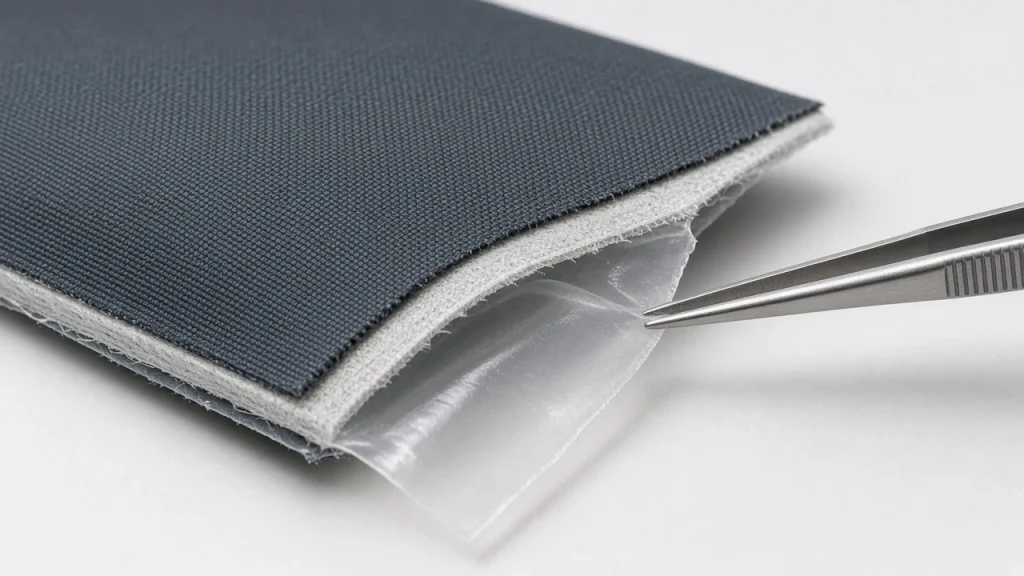
INVISTA describes CORDURA® Classic fabric as high-tenacity, air-jet textured nylon 6,6 in 330D–1000D; 500D and 1000D are the weights most often seen in bags. Dyneema® is a brand of UHMWPE; its own materials guidance describes the composites used in packs as high strength-to-weight, low water absorption and dimensionally stable. X-Pac® laminates (Dimension-Polyant) combine a face fabric, X-PLY® reinforcement and film layers and are sold as waterproof laminates. The finished bag still needs matching seam and closure design.
What denier tells you (and what it doesn't)
Denier is yarn linear density (grams per 9,000 metres of yarn). Higher denier often means a thicker yarn and, in similar weaves, a heavier, more abrasion-resistant cloth. Common outdoor backpack ranges:
- Linings: roughly 150D–420D; ultralight shells are often below 210D (usually ripstop or a composite)
- Mainstream shells: 500D–600D
- Heavier outdoor / travel: 900D–1000D
- Structured “ballistic” looks: often 1680D polyester constructions
Denier does not equal waterproofing. Uncoated fabric can wet out regardless of denier. Tear behaviour also depends on ripstop grids, basketweaves, laminates and coatings, not only the D number. Always pair denier with finished fabric mass (gsm), weave and coating on the tech pack.
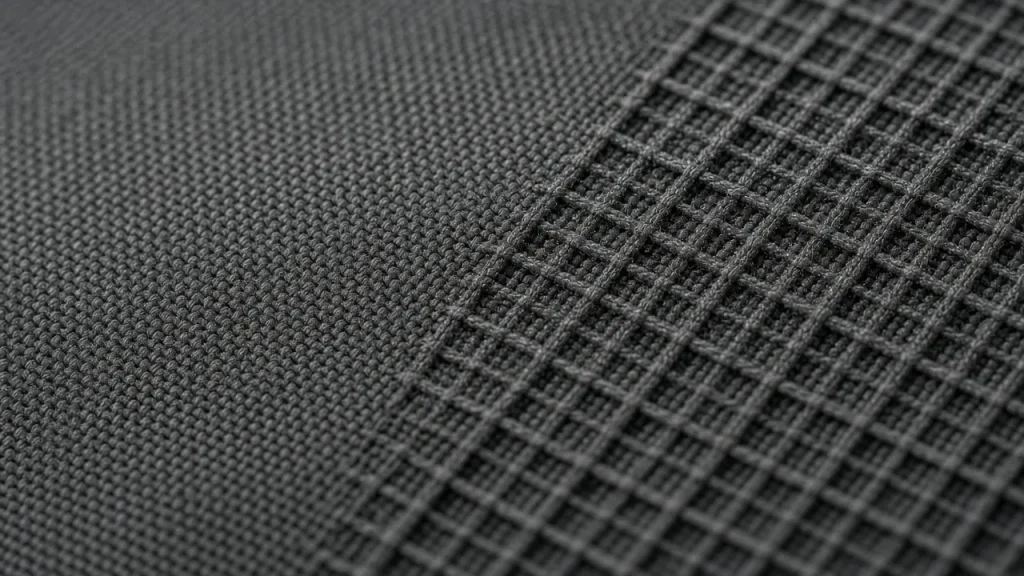
Best Materials for Outdoor Backpacks by Fabric Type
Polyester 600D / 900D / 1680D
Polyester is still the default shell for most OEM daypacks. Stock colours are wide, printing and heat transfer are easy, and the price is easier to hold than with branded high-tenacity nylon.
- 600D + PU — common for school, promotional outdoor, gym, and mid-market daypacks.
- 900D — denser hand for business, laptop, and premium daypacks without jumping to ballistic weight.
- 1680D ballistic-style polyester — structured, abrasion-forward look for travel and premium laptop packs; heavier and usually costlier per metre.
Similar deniers from different mills can still differ in yarn, weave density and coating. Approve a swatch and a sewn sample, not only a name on a quote. If your supplier quotes “Oxford”, see Oxford fabric vs polyester for what the name does and does not specify.
Nylon, ripstop and CORDURA® fabric
High-tenacity nylon 6,6 (for example CORDURA® Classic fabric) earns its higher price where abrasion and tear resistance matter: hiking packs, tactical-style lines and reinforced bases. Ripstop nylon helps stop tears from running; it does not replace a coating for water resistance.
If the brand requires hangtags or trademark use, confirm the mill style and brand approval path early. Asking for an “equivalent” to a branded fabric without a defined TDS leaves colour, hand and abrasion open to interpretation.
Dyneema® / UHMWPE composites and X-Pac® laminates
Use these for premium ultralight or technical packs. Expect higher fabric cost, fewer stock colours, longer fabric sourcing and more care in sewing (needle size, seam placement, reinforcement). For a multi-colour wholesale range where unit price and dye-lot flexibility come first, they are usually the wrong starting point.
Coatings: DWR, PU, PVC, TPU
| Finish | Role | Limitation |
|---|---|---|
| DWR | Surface beading | Wears with abrasion and washing; not a bag waterproof proof |
| PU coating | Flexible water resistance on many daypacks | Open seams and zippers still leak |
| PVC coating | Stronger barrier, wipe-clean feel | Stiffer hand; some retail chemistry preferences avoid PVC |
| TPU film / laminate | Higher barrier; often used when welding is planned | Process and cost differ from simple PU-backed Oxford |
For EU-bound products, chemical compliance discussions often reference REACH obligations for substances in articles. PFAS-related restrictions and retailer policies are tightening in several markets. If the brief requires fluorine-free DWR, ask for declarations and test evidence tied to the destination market; a generic “eco” label is not evidence.
Recycled rPET and canvas
rPET can match virgin polyester of the same construction when the mill build is equivalent. For claims, Textile Exchange’s RCS and GRS cover recycled-content verification and chain of custody. Textile Exchange sets a 50% minimum recycled content for consumer-facing GRS labelling (GRS can be used business-to-business from 20%). Textile Exchange is moving RCS/GRS into its Materials Matter Standard (effective 31 Dec 2026, mandatory from 31 Dec 2027), so ask suppliers which scope certificate they will hold at shipment. Keep claim wording inside the documented scope: which component, what percentage.
Canvas suits lifestyle and heritage outdoor ranges. Without wax, coating or a water-repellent plan, cotton-rich canvas absorbs water and gains weight. Recycled polyester “canvas” looks exist when brands want a canvas aesthetic with synthetic behaviour.
Hardware that belongs in the same material brief
A pack with a strong shell can still fail at a zipper slider, a strap root or a buckle, so specify hardware in the same brief as the fabric. Call out zipper size and construction (for example #5 coil, reverse-coil, or water-resistant tape), webbing width/fibre for load paths, and buckle size matched to webbing. Named zipper brands (commonly YKK) are a buyer preference in many outdoor lines; if an alternate is allowed, define what “equivalent” means for dimensions, cycling feel, and colour.
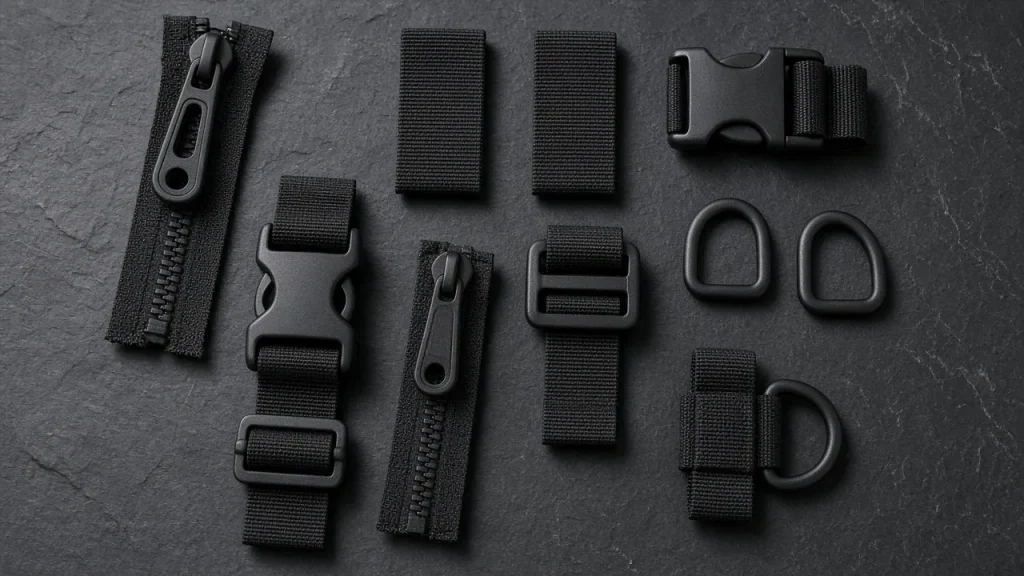
How material choices affect cost and order feasibility
Material, size, structure, logo method and accessories all move the unit price. The fabric you lock also decides how freely you can split quantity across styles and colours. Fabric dye lots, custom Pantone programs, specialty laminates, molded logos, and branded hardware each carry their own sourcing constraints. Finished-bag sewing quantity and material purchasing quantity are not always the same number.
For projects in the 500+ unit planning range, quantity splits matter as much as the headline total. Our guide to custom bag MOQ factors explains how fabric and colour choices affect quantity planning.
- 600 pcs × 1 style × 2 stock colours is a different sourcing brief from 600 pcs × 3 styles × 4 custom colours.
- Sharing one shell fabric and zipper colour across SKUs usually simplifies purchasing more than changing only the woven label.
- Custom-dyed nylon or limited laminate colours often need earlier colour lock than stock polyester Oxford.
If budget or calendar is tight, keep the carrying system, base reinforcement, and closure quality; adjust decorative panels, extra pockets, custom hardware, and packaging complexity first. Changing to a lighter denier “to save money” without checking abrasion can create returns that cost more than the fabric saving.
For Amazon private-label programs, put carton size, polybag warning, label position and unit dimensions on the PO, and check them against the current Seller Central packaging requirements for your category before bulk packing. Fabric choice does not settle any marketplace rule on its own.
Sample checklist for outdoor backpack materials
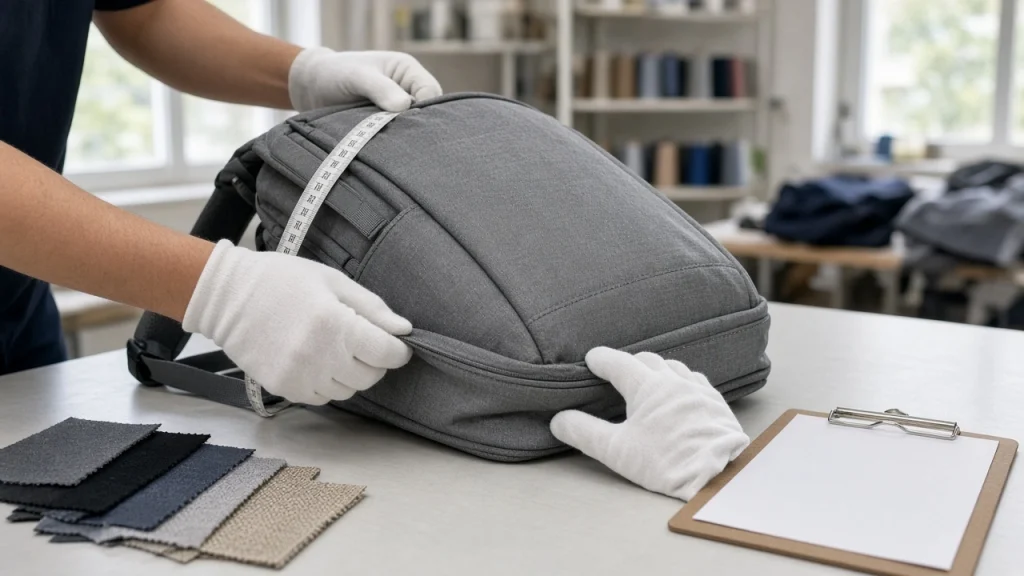
Approve the sample as the bulk reference, and write down what it is made of. A sample that only looks right is not a reference.
| Check | What to record |
|---|---|
| Fabric identity | Fibre, denier, gsm, weave, mill/style if known, coating/laminate |
| Colour | Stock vs custom; approved under agreed light; lot reference |
| Water claim | Fabric result method (e.g. ISO 811 / AATCC TM127) vs finished-bag exposure agreed |
| Abrasion zones | Base, corners, and strap contact; optional Martindale or Taber method if required |
| Load points | Shoulder strap anchors, haul handle, daisy chains; bartack / box-X present |
| Closures | Zipper size/brand if specified; operation under load; buckle/webbing match |
| Fit & access | Intended contents packed; pocket reach; strap adjustment range |
| Logo & labels | Method, size, position, wash/abrasion behaviour on that fabric |
| Packing | Folded size, foam crush, how the bag presents after unpacking |
| Revisions | Written change list; which sample revision is the bulk standard |
Bulk risks that show up after a “pretty” sample: coating variation between dye lots, zipper tape colour drift, thinner foam substitutions, missing reinforcement at strap roots, and water entry at needle holes when marketing language overstated the construction.
RFQ information list (for a usable outdoor backpack quote)
Send enough detail that two factories would quote the same bag:
- Backpack type and primary activity (day hike, travel, cycling, climbing approach, etc.)
- Approximate dimensions / capacity and intended load
- Quantity by style and colour (not only a total)
- Preferred shell, lining, coating, and any brand-name fabrics that must or must not be used
- Logo methods and placement sketches
- Hardware preferences (zipper series, buckle type, webbing widths)
- Packaging (polybag, hangtag, insert, carton marks) for wholesale, retail, or ecommerce
- Destination market(s) and any chemical / claim constraints (REACH awareness, PFAS-free DWR, GRS wording)
- Reference photos, drawings, existing sample, or concept notes
- Planned purchasing window (for capacity and material planning; no date is a factory promise until confirmed)
Development can start from photos, drawings, existing samples, or concepts. Final production specs should follow the approved sample. Before you send an RFQ, our guide on how to check a custom backpack manufacturer covers what to ask the factory.
Outdoor Backpack Material FAQ
Is higher denier always better for outdoor backpacks?
No. Higher denier usually adds abrasion resistance and structure, but it also adds weight and cost. Many packs use a 500D–600D body with a 1000D or 1680D base panel.
Does waterproof fabric mean a waterproof backpack?
No. Fabric hydrostatic tests evaluate the textile. Finished-bag water entry depends on seams, zippers, and openings. Define exposure and verification before using “waterproof” on packaging.
When should we choose high-tenacity nylon (such as CORDURA® fabric) instead of 600D polyester?
When abrasion, tear strength and brand positioning justify higher fabric cost, especially on bases and high-wear panels. For broad colour assortments and print-led wholesale lines, coated polyester is often the more practical starting point.
When are Dyneema or X-Pac worth specifying?
When the SKU is sold on light weight or a waterproof laminate, and the plan can absorb specialty fabric cost and a short colour list. For multi-colour ranges priced on landed cost, start elsewhere.
What should private-label sellers verify on materials for online listings?
Keep listing claims aligned with what you can support: recycled content scope, water-resistance wording, weight, and dimensions. Package and carton consistency matter for ecommerce operations; material choice alone does not settle marketplace compliance.
How should a 500+ unit project allocate colours and materials?
Fewer style–colour combinations with shared shell and trim usually reduce sourcing friction. Custom colours and specialty laminates need earlier lock-in. Review allocation before treating any quantity split as production-ready.
Plan an outdoor backpack materials review with Voufan Bags
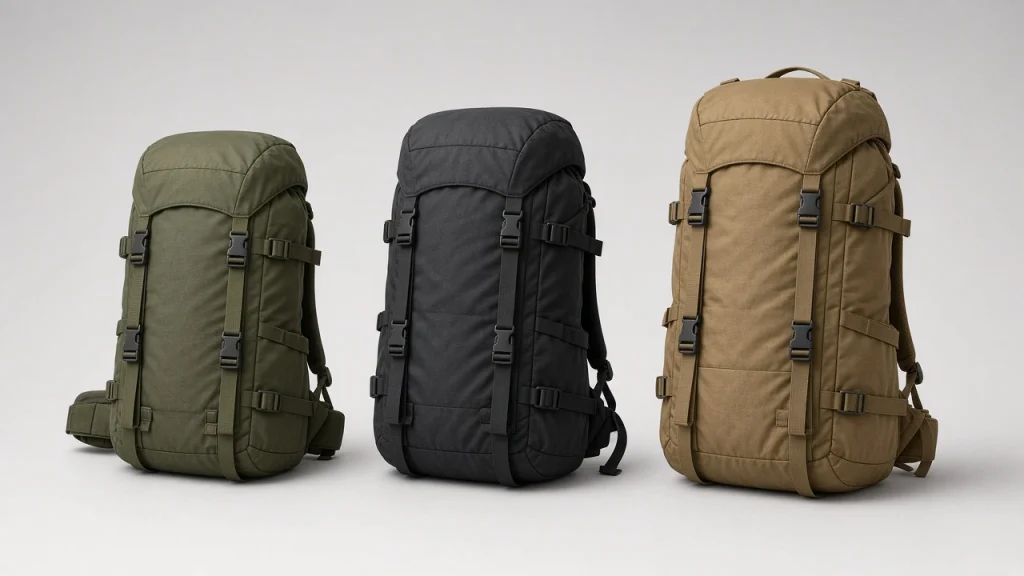
Voufan Bags is a China OEM/ODM custom bag manufacturer in Shenzhen, working with brands, importers, wholesalers, distributors and private-label sellers since 2008. For outdoor backpacks we handle development, sampling, material sourcing, production, quality control and export support (see our OEM bag manufacturing service), and we can start from photos, drawings, an existing sample or a product concept.
If you are planning an outdoor backpack program, send us these five things and we will come back with material options for your use case:
- Bag type, main use and target size or capacity
- Total quantity and the split by style and colour
- Shell fabric preference or a reference sample, plus coating and hardware requirements
- Logo method and packaging (retail, wholesale or ecommerce)
- Destination market and any claims you need to support (water resistance, recycled content, PFAS-free finish)
MOQ is 500 pcs; sampling and pricing depend on the product and are confirmed on the quotation.
Prefer email? sales@voufanbags.com