How to Start a Custom Backpack Brand

Starting a custom backpack brand requires more than a good design idea. It demands a clear understanding of manufacturing realities, material performance, production economics, and supply chain logistics. As an OEM manufacturer with extensive experience producing private-label and custom backpacks for international brands, we see the same questions repeatedly from US and EU importers, Amazon sellers, and wholesalers.
This guide provides a practical, step-by-step framework based on real factory workflows. It covers positioning, manufacturer selection, technical specifications, sampling, pricing structure, branding, production quality control, and scaling. The goal is to help you move from concept to first shipment with realistic expectations and reduced risk.

Why Custom Backpack Brands Are Growing Rapidly in Global Markets

The global backpack market was valued at approximately USD 21–22 billion in 2025–2026 and is projected to grow at a CAGR of 6–9% through the early 2030s, reaching USD 30–45 billion. Growth is driven by urban commuting, remote work, outdoor recreation, travel recovery, and demand for functional, durable everyday carry solutions.
For new brands, the opportunity lies in niche positioning: sustainable materials, tech-integrated designs, specialized use cases (laptop, travel, tactical, kids, or corporate), or premium aesthetics at accessible price points. Importers who understand manufacturing constraints early can capture share by offering differentiated products that mass-market brands cannot match quickly.
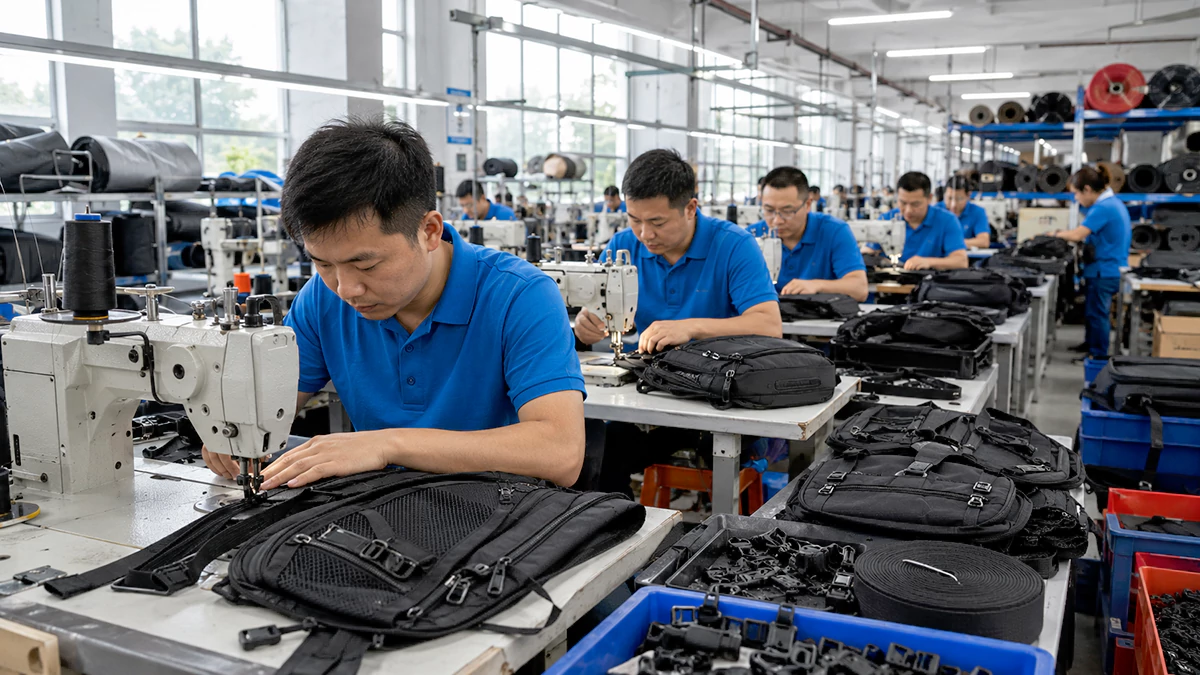
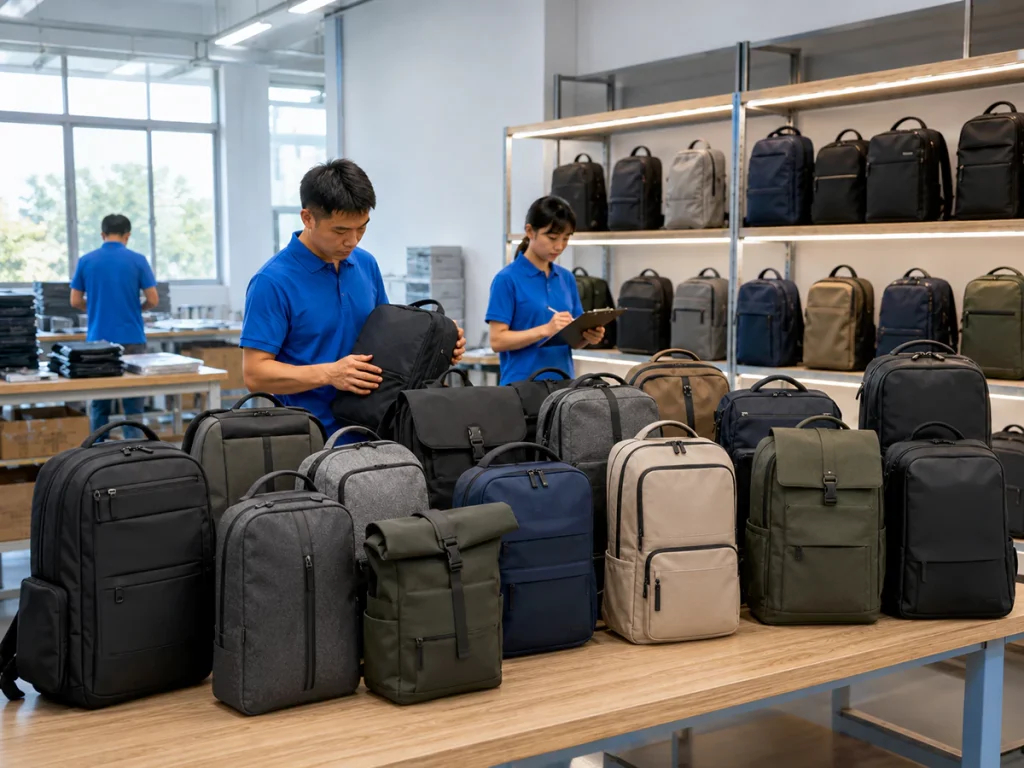
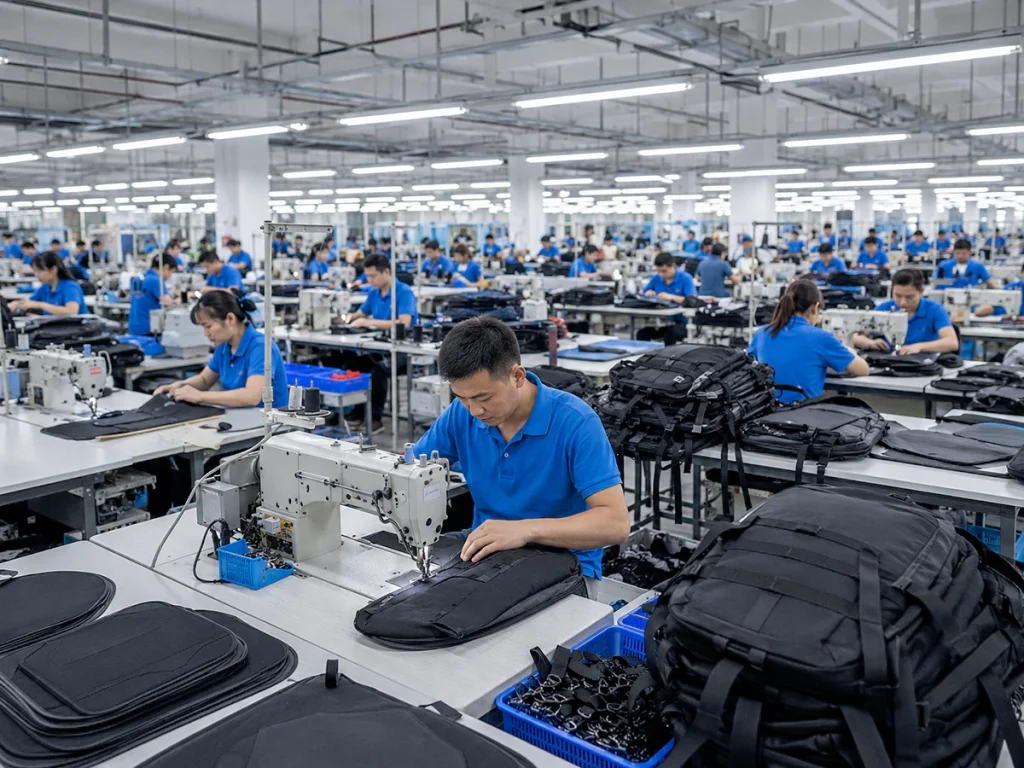
OEM backpack manufacturing production line showing active custom backpack assembly for global brands

Understanding OEM vs ODM Backpack Manufacturing
OEM (Original Equipment Manufacturer) means you provide the complete design, technical pack (tech pack), measurements, materials, and construction details. The factory produces exactly to your specifications. You retain full design ownership and IP.
ODM (Original Design Manufacturer) means the factory offers existing base designs. You select a model and customize branding, colors, minor details, or packaging. Development is faster and lower cost, but you share the base design with other buyers and have less exclusivity.
OEM means the factory produces strictly according to your design and specifications, while ODM means the factory provides existing designs that you can customize with your branding. For a more in-depth comparison of the advantages, limitations, and ideal use cases of each model, we recommend reading our complete guide: OEM vs ODM Bag Manufacturing: A Complete Guide for Brands.
Most successful custom backpack brands start with OEM for their core hero products to protect differentiation, then use ODM for faster line extensions. Choose based on your design resources, timeline, and need for exclusivity.
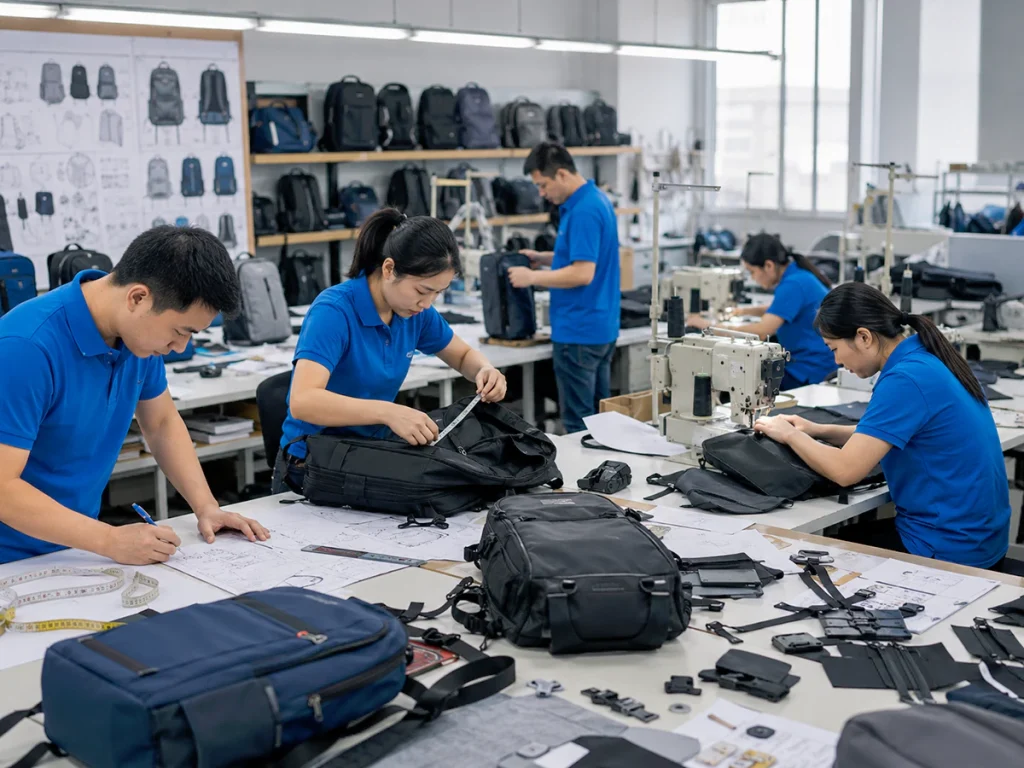
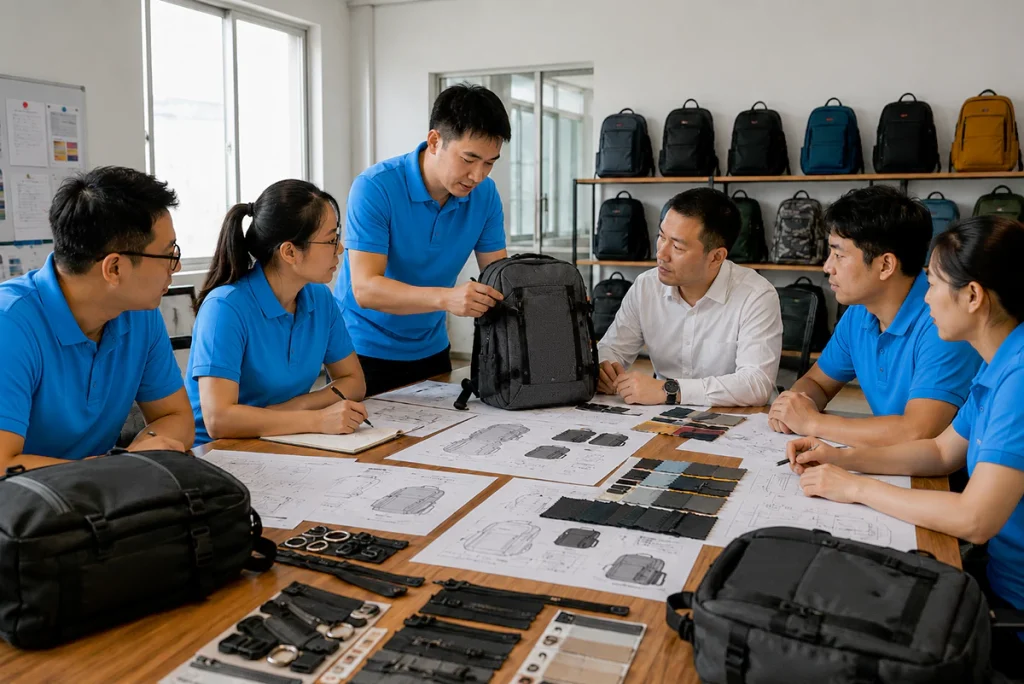
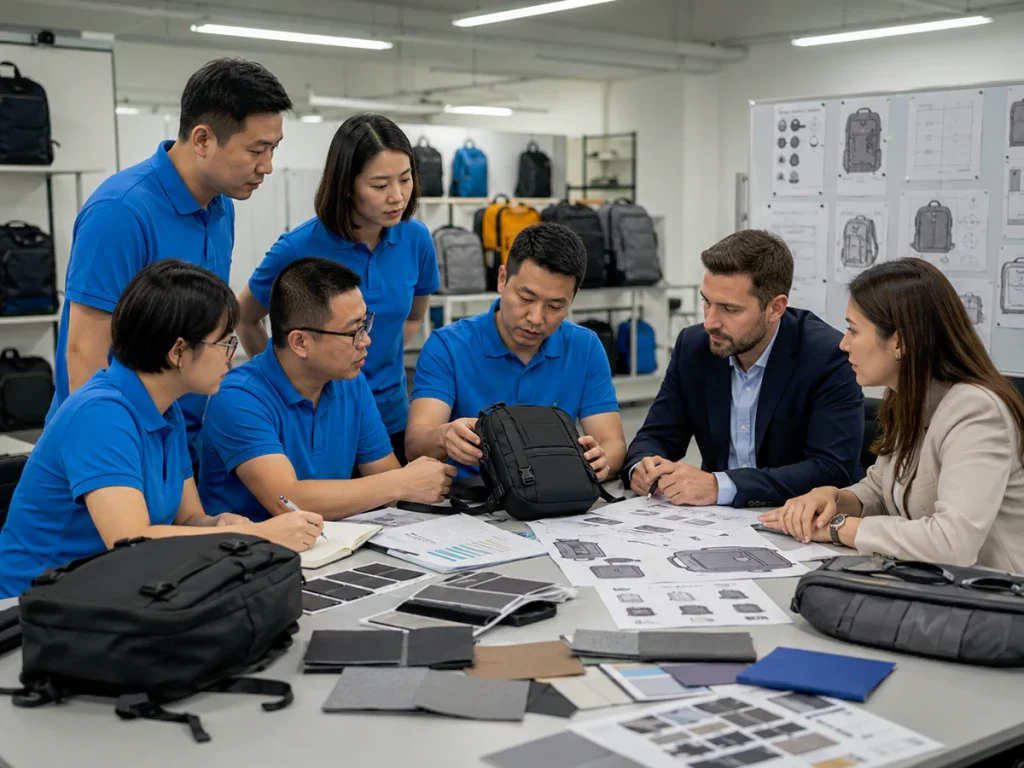
OEM factory design consultation meeting reviewing custom backpack tech pack and samples

Step 1 – Define Your Backpack Brand Positioning and Target Market

Before contacting any factory, define your positioning clearly. Answer these questions:
  • Who is the end user (students, professionals, hikers, travelers, corporate gifting)?
  • What price range will the retail or wholesale price support?
  • What are the key performance requirements (water resistance, laptop protection, weight, durability, sustainability)?
  • What makes your brand different (materials, features, story, aesthetics)?
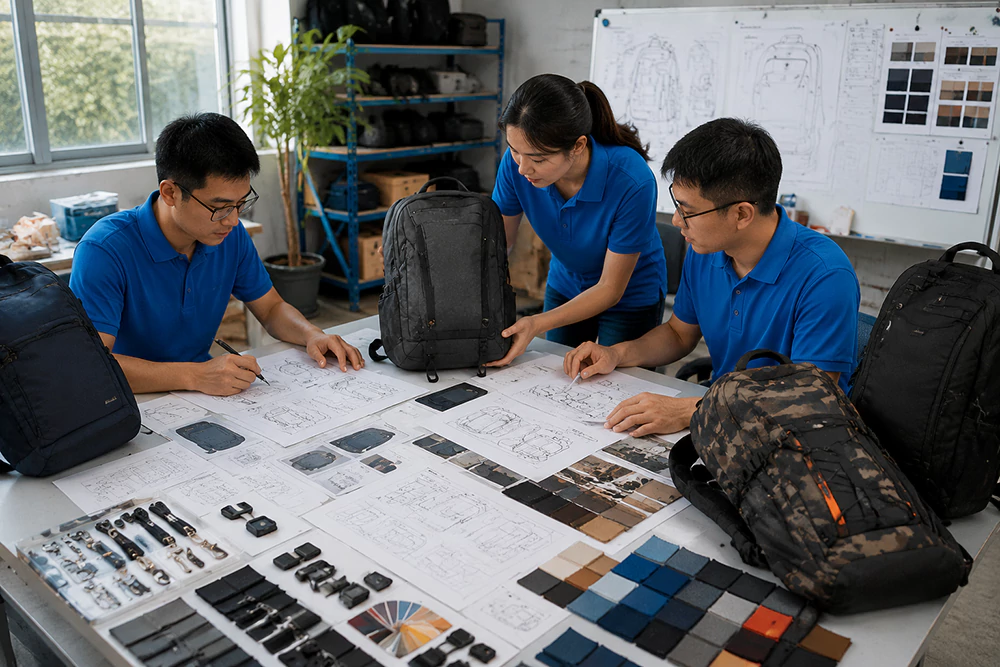
Create a detailed tech pack early. Include front/back/side views, exploded diagrams, material callouts, measurements with tolerances (±5mm typical), stitching details, and hardware specifications. Factories can refine it, but a strong starting point accelerates sampling and reduces revision cycles.
Custom backpack brand positioning and tech pack development at OEM factory

Step 2 – How to Select a Reliable Backpack Manufacturer

Evaluate potential OEM partners on these criteria:
  • Years in business and specialization in backpacks (not general bags)
  • In-house capabilities (cutting, sewing, assembly, printing/embroidery, quality lab)
  • Export experience to your target market (US/EU compliance, testing)
  • Communication responsiveness and English/technical proficiency
  • Willingness to share references, factory audit reports, and material certifications
  • Transparent MOQ, sampling, and pricing policies
Request a factory tour (virtual or in-person) or third-party audit (SGS, Intertek, or equivalent). Verify they maintain consistent capacity and do not overpromise on low MOQs that compromise quality on repeat orders.

When choosing a manufacturing partner, it’s essential to assess not only their production capabilities but also their experience with international buyers and ability to maintain consistent quality at scale. Our OEM & Private Label Guide  offers practical insights into supplier evaluation, quality standards, and what to look for when working with OEM factories.
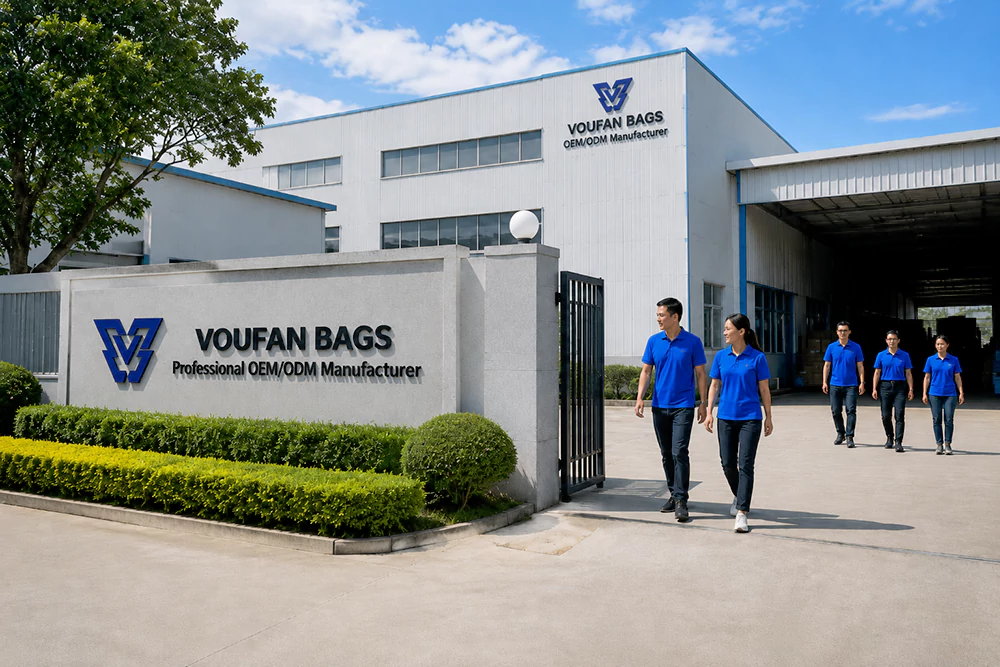
Reliable OEM backpack manufacturing factory facility exterior

Step 3 – Material Selection and Technical Specifications

Material choice drives both cost and performance. Common options include:

  • 600D–900D polyester: Balanced cost and durability for everyday/school use
  • 1680D ballistic nylon or Cordura: Premium abrasion resistance for travel/tactical
  • Recycled polyester or RPET: Growing demand for sustainability claims
  • Oxford or ripstop fabrics for lighter constructions
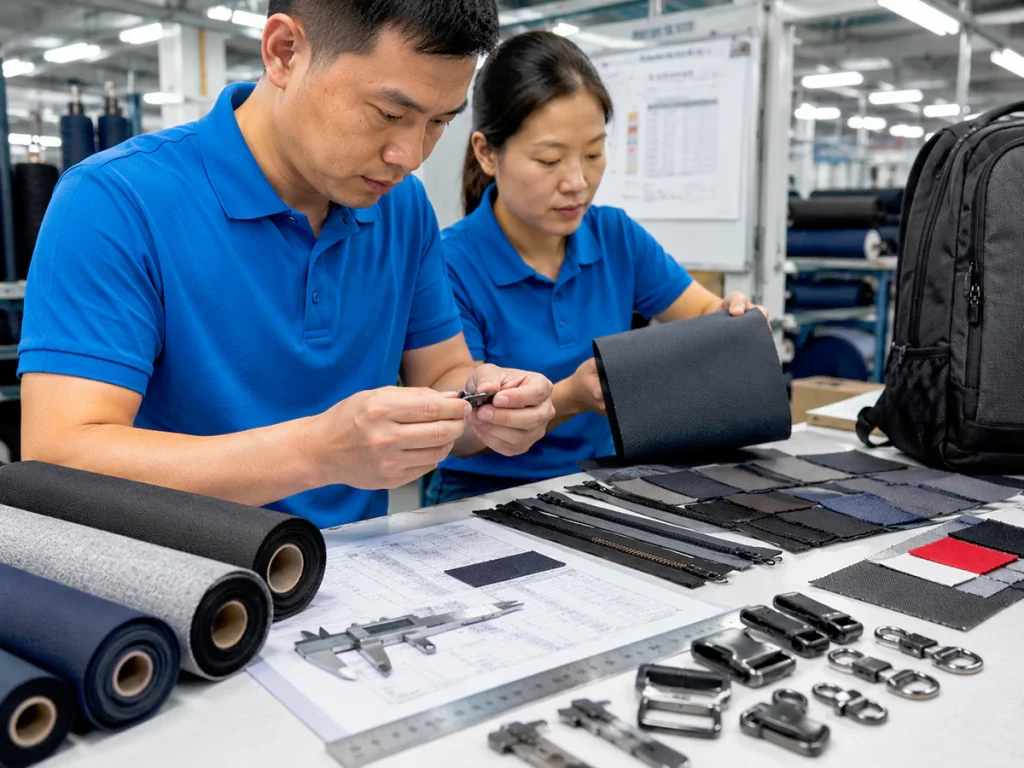
Key specifications to define: fabric weight (GSM), denier, waterproof coating (PU or TPU), zipper type (YKK preferred for reliability), buckle/hardware grade, foam density for padding, and lining material.Request material swatches and test reports (tear strength, color fastness, waterproofing). Factories can suggest cost-effective alternatives that maintain performance.
Choosing the right materials has a direct impact on both product performance and overall cost. While we’ve covered the most common fabric options and key specifications above, for a more comprehensive guide on backpack materials, performance comparisons, and design considerations, you can refer to our Bag Materials & Design section.
Material inspection and technical specification review at backpack OEM factory

Step 4 – Sample Development and Prototyping Workflow

The sampling process typically follows this sequence:
  1. Tech pack review and quotation
  2. Material sourcing and approval
  3. Pattern making and first prototype (usually 7–21 days)
  4. Revisions (1–3 rounds common)
  5. Pre-production sample (gold sample) for approval
Expect sample costs of USD 120–350 per style depending on complexity and materials. Timeline from initial inquiry to approved pre-production sample is usually 3–8 weeks. Build buffer time into your launch schedule. The approved sample becomes the quality benchmark for mass production.

Step 5 – MOQ, Pricing Structure, and Cost Drivers Explained

Typical MOQ for custom backpacks ranges from 300–500 pieces per style and color for standard constructions. More complex designs, custom hardware, or special materials may require 500–1,000+ pieces for economic viability.Factory pricing structure usually breaks down as:
  • Materials (fabric, zippers, hardware, foam): 55–70%
  • Labor and overhead: 20–30%
  • Profit margin and factory costs: balance
A basic school backpack might cost USD 6–12 FOB China at 500+ pieces. A premium laptop backpack with better hardware and padding often ranges USD 14–28. Total landed cost includes shipping, duties, and inspection fees. Request a detailed BOM (Bill of Materials) breakdown so you understand where costs can be optimized without sacrificing quality.
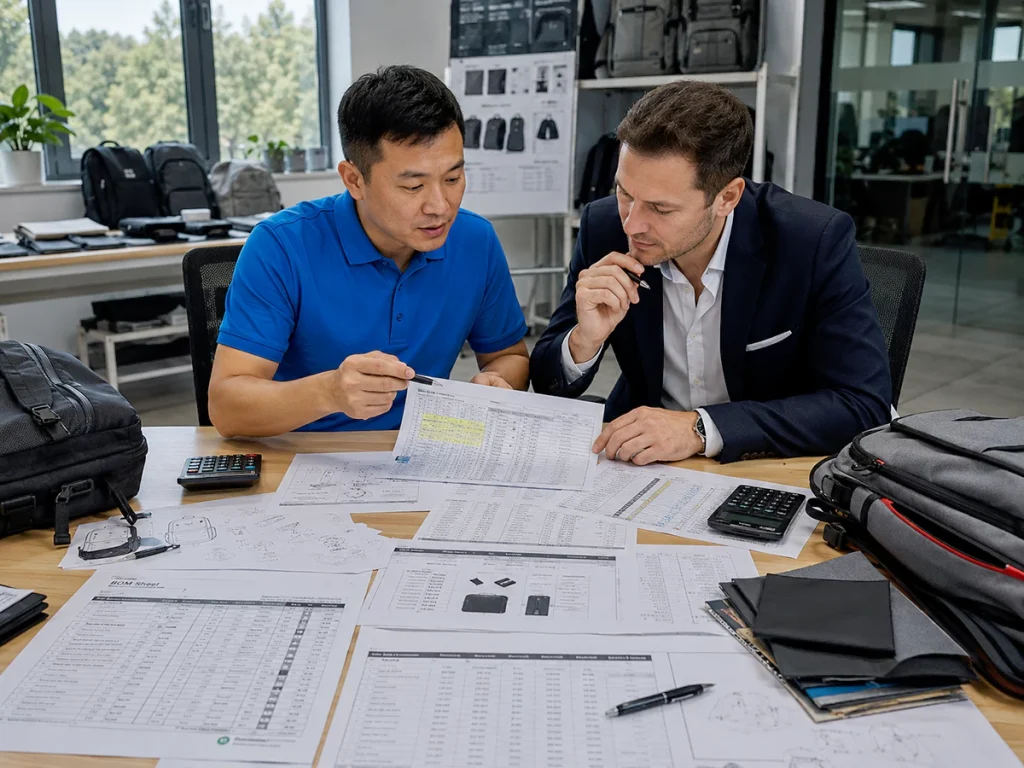
Understanding MOQ requirements and cost structure is one of the most important steps before starting production. Different backpack styles and customization levels can significantly affect both minimum order quantities and final pricing. For a more comprehensive breakdown of manufacturing costs, MOQ considerations across different bag types, and practical examples, you can refer to our 
Bag Manufacturing Guide.
MOQ and cost breakdown discussion for custom backpacks at OEM factory

Step 6 – Branding, Packaging, and Private Label Strategy

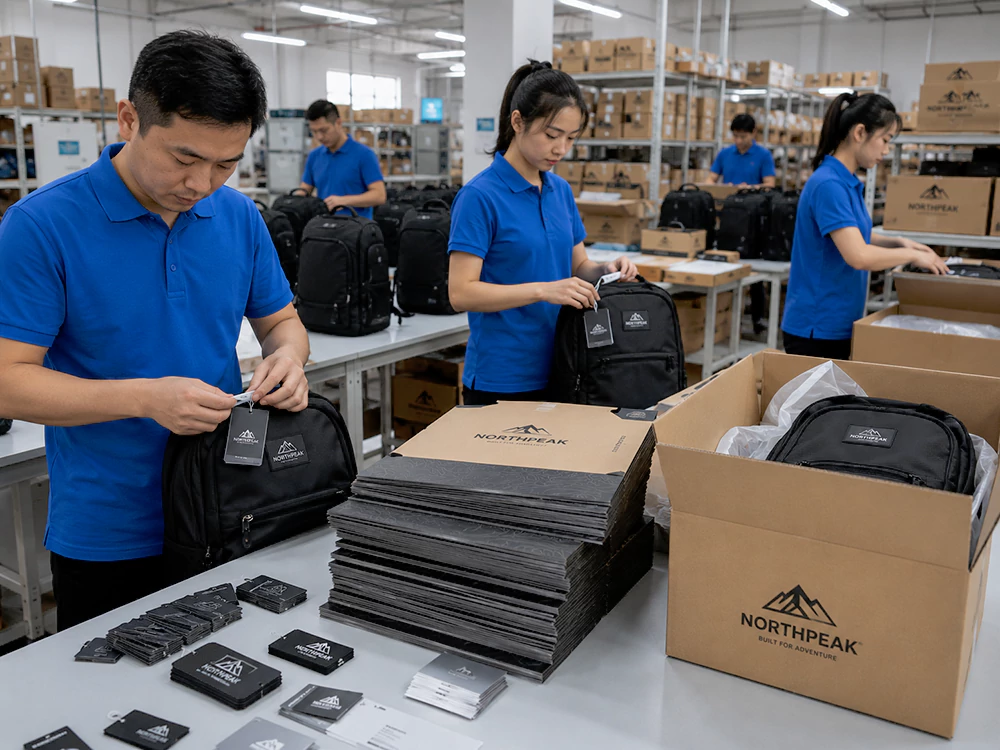
Private labeling includes woven labels, hangtags, custom packaging, and outer cartons. Most OEMs support heat transfer, screen printing, embroidery, or woven labels for branding.
Discuss packaging early: retail boxes, poly bags, or custom inserts. Sustainable packaging options (recycled materials, minimal plastic) are increasingly requested by EU and US buyers. Ensure all branding complies with import regulations (country of origin marking, care labels).
Private labeling is an effective strategy for brands that want to bring products to market under their own name without handling every stage of product development from scratch. Since we’ve covered the key elements of branding and packaging above, if you’d like to see the complete step-by-step process of how factories manage private label production — including design handover, branding execution, and packaging — you can read our detailed guide here:
How Private Label Bag Manufacturing Works.

Step 7 – Mass Production, QC, and Factory Inspection Standards

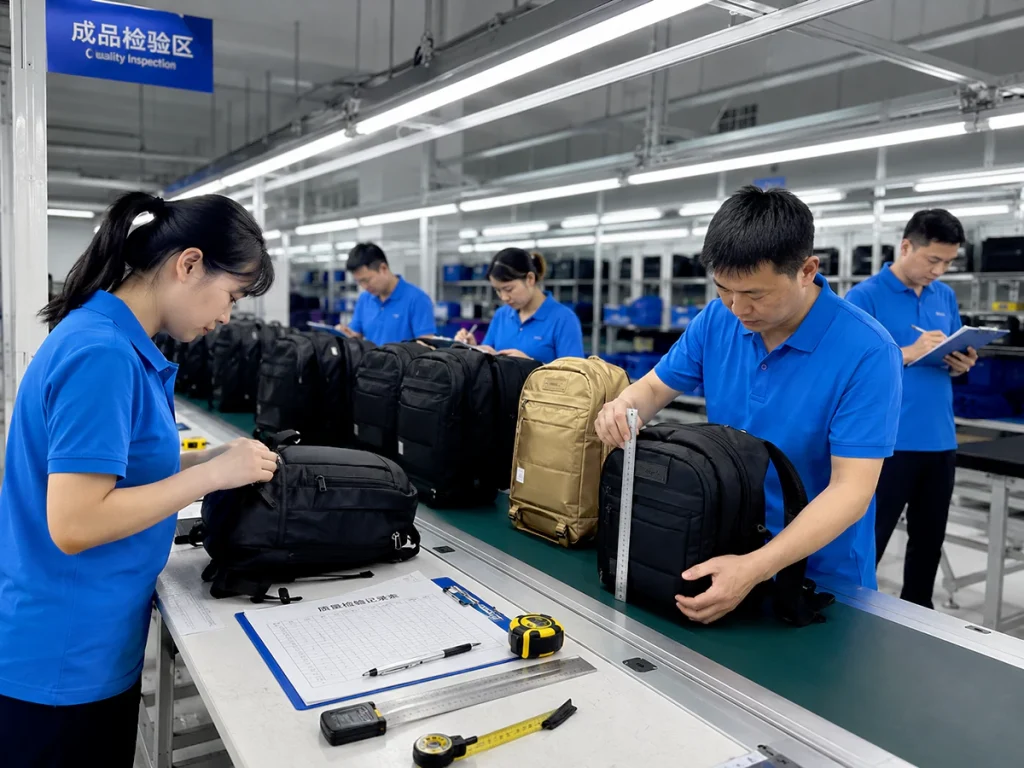
Quality control occurs at multiple stages: incoming material inspection, in-line during sewing and assembly, and final inspection. Reputable factories use AQL (Acceptable Quality Level) standards, commonly AQL 2.5 for major defects and 4.0 for minor.
Buyers should arrange third-party pre-shipment inspection (PSI) for larger orders. Key checkpoints include stitching consistency, hardware function, measurements within tolerance, color matching, and packaging accuracy. Document everything with photos and signed approval samples.
Step 8 – Logistics, Shipping Terms, and Delivery Optimization

Common shipping terms are FOB (Free On Board) port of origin or EXW (Ex Works). Many buyers consolidate orders or use freight forwarders for better rates.
Production lead time after sample approval is typically 30–60 days depending on order volume and factory schedule. Add 15–45 days for ocean freight to US/EU ports (air freight for urgent smaller orders). Plan for peak season capacity constraints (Q3/Q4). Work with experienced forwarders familiar with textile and bag shipments.
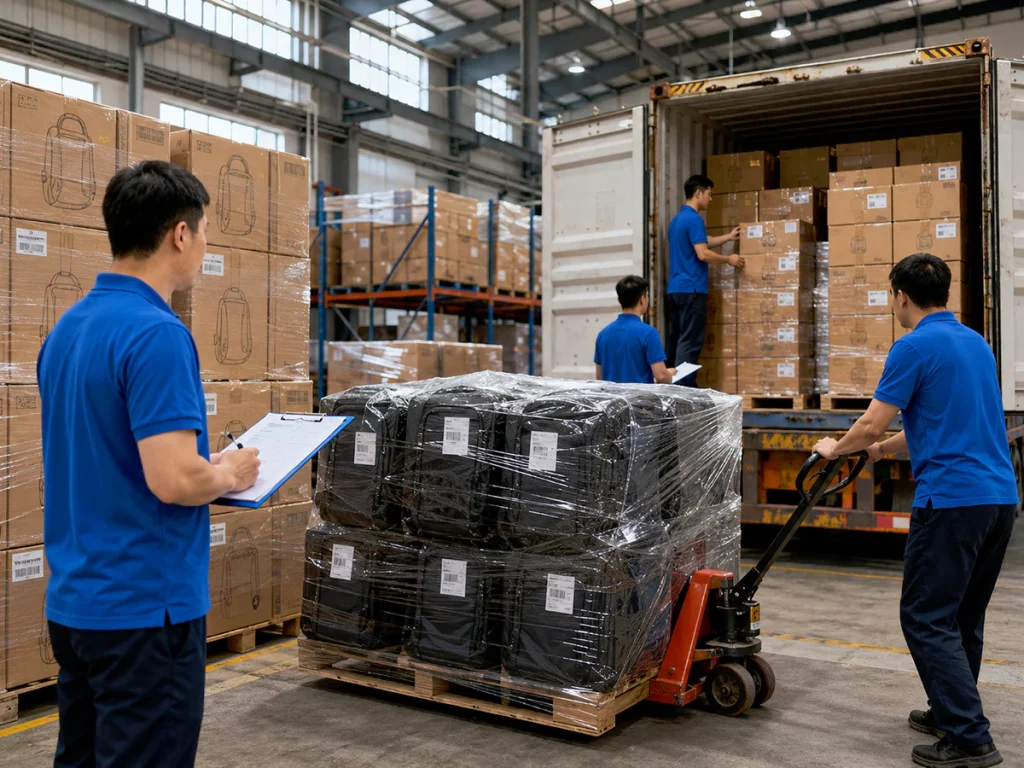
Logistics and shipping preparation for OEM backpack orders

Common Mistakes New Backpack Brands Make (Critical Section)

Frequent pitfalls include:
  • Underestimating total landed cost (focusing only on factory price)
  • Choosing the lowest MOQ without verifying long-term scalability
  • Skipping detailed tech packs or material testing
  • Poor communication leading to multiple revision rounds and delays
  • Ignoring IP protection or proper contracts
  • Selecting factories based solely on price rather than capability and reliability
Avoid these by investing time in preparation and choosing partners who provide transparent guidance.
One of the most frequent mistakes we see is when new brands rush into production without clearly deciding between OEM and ODM models. This often leads to misunderstandings about design ownership, customization limits, timelines, and costs. To avoid this common pitfall and make a more informed decision, we recommend reading our detailed comparison: OEM vs ODM Bag Manufacturing: A Complete Guide for Brands.
Addressing common mistakes in custom backpack manufacturing process

How to Scale From Small Orders to Global Brand Distribution
Start with manageable MOQs to test market response. Once a style proves successful, increase order quantities to improve unit pricing and secure better payment terms. Build long-term relationships with your OEM for priority capacity and collaborative product development.
Document processes, maintain approved samples, and consider multiple factories for risk diversification as volume grows. Many brands begin with one reliable OEM partner and expand later.

Final Takeaway: Building a Sustainable Backpack Brand

Success in custom backpack manufacturing comes from realistic planning, clear communication, and selecting an OEM partner who treats your project as a long-term collaboration rather than a one-off transaction. Focus on quality specifications, transparent costing, and consistent execution.
The brands that scale successfully are those that understand the manufacturing process deeply and work with factories that share that knowledge openly.
If you have a tech pack ready or specific questions about materials, MOQ feasibility, or current capacity, our team is available to review details and provide guidance.
Building a sustainable custom backpack brand with reliable OEM manufacturing

Frequently Asked Questions

What is the typical MOQ for custom backpacks from an OEM manufacturer?
Most OEM factories quote 300–500 pieces per style and color for standard custom backpacks. Complex designs or special materials may require 500–1,000+ pieces for cost efficiency.
From tech pack submission to approved pre-production sample, expect 3–8 weeks depending on revisions and material availability. First prototypes are often ready in 7–21 days.
OEM produces to your exact design and specifications with full IP ownership. ODM uses the factory’s existing base designs with your branding and minor customizations for faster development.
Yes. Most OEMs support custom woven labels, hangtags, embroidery, printing, and branded packaging for private label programs.
Materials (fabric, zippers, hardware) typically account for 55–70% of factory cost. Labor, overhead, and margin make up the remainder. Detailed BOM breakdowns help identify optimization opportunities.
Bulk production usually takes 30–60 days after pre-production sample approval and material arrival, depending on order volume.
Yes. Many factories offer RPET, recycled polyester, and other sustainable options with proper certifications upon request.
Reputable OEMs use multi-stage inspection (incoming materials, in-line, final) with AQL standards. Third-party pre-shipment inspection is recommended for larger orders.
FOB port of origin is most common. EXW is also available. Buyers typically arrange freight forwarders for ocean or air shipping to final destination.
Yes, many factories accommodate starting orders of 300–500 pieces, though unit pricing improves significantly at higher volumes.
Scroll to Top