
How to Choose a Reliable Custom Backpack Manufacturer
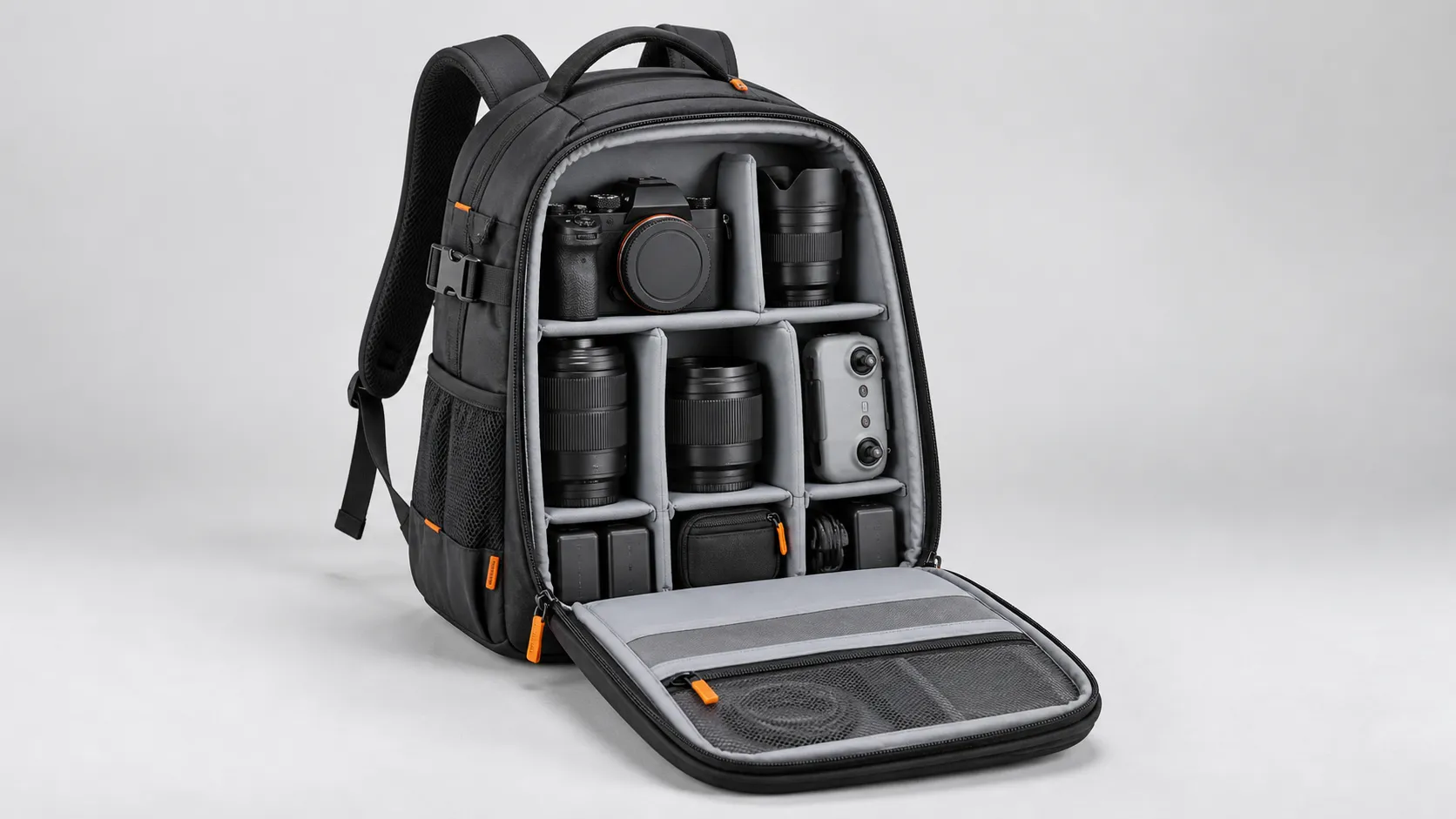
A custom camera backpack designed for retail or private label needs to do more than hold a camera and a few lenses. It must protect fragile equipment, carry comfortably under load and remain consistent across bulk production.
For brands, importers, distributors and Amazon sellers, choosing the right design starts with the use case—not with adding as many features as possible.
This guide explains the decisions that affect protection, materials, comfort, production cost and sample approval when developing a custom camera backpack.
Quick Answer: What Makes a Good Custom Camera Backpack?
A reliable camera backpack should combine five elements:
-
A compartment layout based on the user’s actual equipment
-
Suitable padding around the base, sides and dividers
-
Fabric and zipper protection appropriate for the intended environment
-
A carrying system designed for the expected load
-
Construction that can be reproduced consistently in bulk production
The best specification depends on whether the backpack is intended for city photography, travel, outdoor use, drone equipment or professional camera kits.
For a B2B custom camera backpack project, the intended equipment, retail positioning and target order quantity should be confirmed before quotation, then verified through a physical sample.
1. Start With the Target User and Equipment List
“Large capacity” is not a complete specification. Before developing the internal layout, define what the backpack needs to carry.
A useful equipment list may include:
-
Camera body quantity and approximate dimensions
-
Lens sizes, including the longest lens
-
Drone body, controller and spare batteries
-
Laptop or tablet size
-
Tripod or monopod
-
Chargers, memory cards and small accessories
-
Personal items needed during travel
-
Maximum acceptable packed weight
For camera backpacks intended for air travel, battery storage should also be considered during product development. The U.S. Federal Aviation Administration advises that spare lithium batteries be kept in carry-on baggage and protected from damage and short circuits.
This information determines the usable internal dimensions and the number, thickness and position of the dividers.
For retail programs, it is also worth deciding whether the backpack should suit one clearly defined kit or offer a more flexible layout for different users. A universal layout can reach a broader market, but too many dividers may increase weight, material use and assembly time without improving the user experience.
2. Plan the Compartment Structure Before Choosing Materials
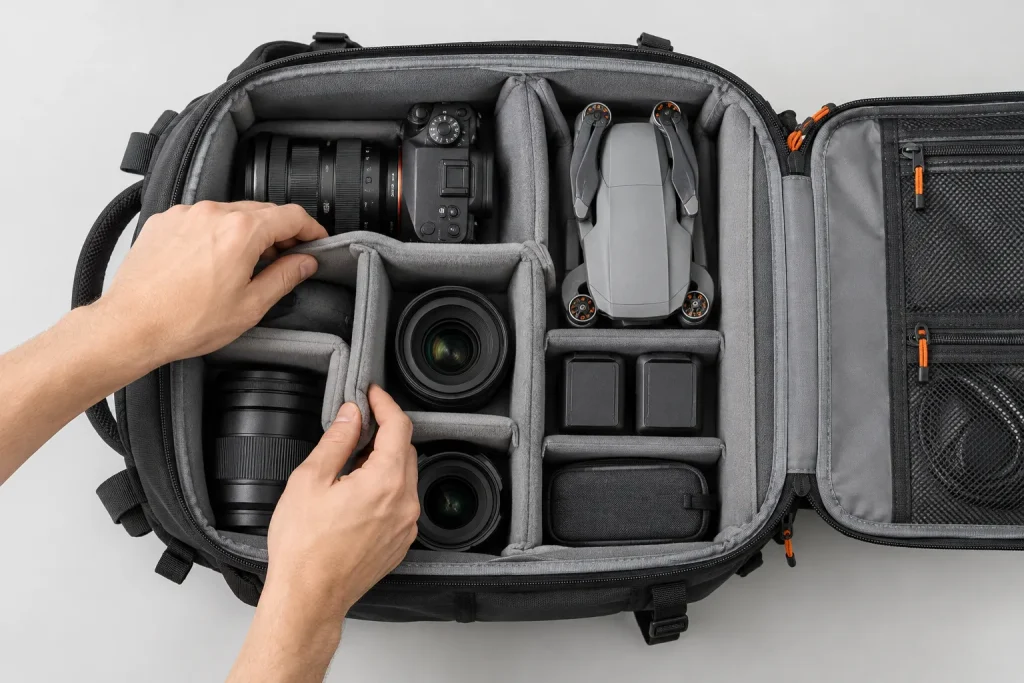
The compartment layout is one of the first details to confirm when developing a custom camera backpack because it directly affects equipment protection, usable capacity and access.
Common configurations include:
Full Camera Compartment
Most of the main compartment is used for camera equipment. This design provides high equipment capacity but leaves less room for clothing or personal items.
It is suitable for photographers who carry several lenses, two camera bodies or a larger professional kit.
Split Camera and Personal Storage
The lower section holds camera equipment while the upper section carries personal items. This is often practical for travel, day trips and urban photography.
The dividing panel should be designed carefully. If it is too soft, weight from the upper compartment may press against the camera equipment below.
Removable Camera Insert
A padded insert allows the backpack to be used as both a camera bag and a general-purpose backpack.
This creates a flexible selling point, but the insert must fit closely enough that it does not shift during movement. Handle position, closure method and foam thickness should be checked during sampling.
Side or Rear Access
Side access helps users reach a camera quickly without fully removing the backpack. Rear access can provide better control over the opening and keep the main zipper away from the outer-facing side.
The right option depends on the intended workflow. Multiple access points can improve convenience, but they also add zippers, sewing operations and potential water-entry areas.
3. Match the Protection System to the Product Positioning

Protection is not determined by foam thickness alone.
A complete protection system may include:
-
Outer fabric with suitable abrasion resistance
-
Sidewall and base padding
-
Padded adjustable dividers
-
A raised or reinforced laptop compartment
-
Internal lining that does not scratch equipment
-
Reinforcement around handles and shoulder-strap attachment points
-
A structured base that limits impact from setting the bag down
PE foam and EVA foam are commonly considered for protective sections, but density and recovery are as important as nominal thickness. Very soft foam can compress under a heavy load, while overly rigid construction can add weight and reduce usable space.
During sample evaluation, load the backpack with representative equipment and check whether the contents move, press against one another or touch the ground when the bag is placed down.
4. Define Water Protection Accurately

“Waterproof” is often used too broadly in bag marketing.
A coated polyester or nylon fabric may resist light rain, but water can still enter through seams, zipper openings or construction points. Unless the complete bag has been designed and tested for a defined waterproof standard, “water-resistant” is usually the more accurate description.
Possible protection options include:
-
PU-coated polyester or nylon
-
TPU-laminated fabric
-
Water-resistant zippers
-
Zipper garages or protective zipper flaps
-
Reduced seam exposure
-
A separate rain cover
-
A reinforced, water-resistant base panel
The correct combination depends on the target price, expected weather exposure and weight requirement.
If a particular waterproof rating or test method is required, it should be stated before sampling. Any water-protection claim for a custom camera backpack should then be verified against the approved materials and complete construction.
5. Evaluate the Carrying System Under Real Load
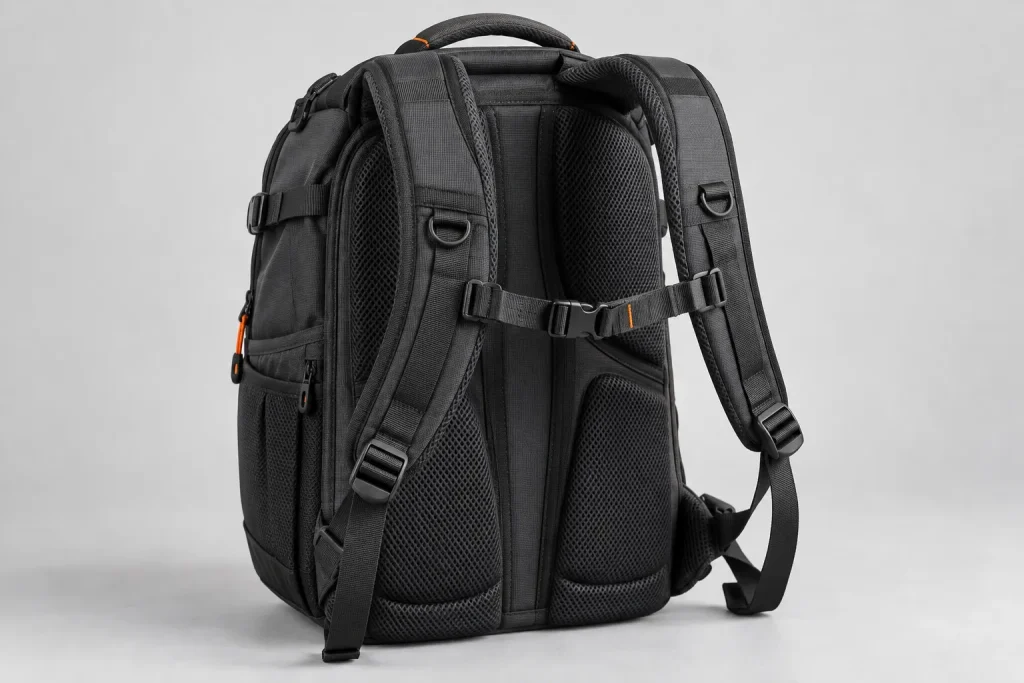
Camera equipment is dense and often heavier than ordinary travel items. A backpack that feels comfortable when empty may perform very differently when loaded.
Key areas to evaluate include:
Shoulder Straps
Check the strap width, curve, foam density and distance between the upper attachment points. The shape should suit the intended user group rather than simply looking thick.
Back Panel
Air-mesh channels may help ventilation, but the panel also needs enough structure to keep equipment from pressing into the user’s back.
Sternum and Waist Straps
A sternum strap helps stabilize the shoulder straps. A waist belt can transfer part of the load for larger outdoor models, although it may be unnecessary for a compact city backpack.
Load Distribution
Heavy equipment should sit close to the user’s back. If the deepest compartment is placed too far outward, the backpack may pull backward and become uncomfortable.
Comfort should be reviewed with the intended equipment weight during sample testing, not judged from product photos alone.
6. Choose Materials for a Custom Camera Backpack
Material selection affects abrasion resistance, water resistance, weight, appearance and price.
Common options for custom camera backpacks include:
-
Polyester for balanced cost and broad color availability
-
Nylon where lower weight or higher tear resistance is required
-
Oxford fabrics for a structured, durable appearance
-
Ripstop constructions for outdoor-oriented products
-
TPU-laminated fabrics for certain water-resistant designs
-
EVA-molded panels where additional shape or impact protection is needed
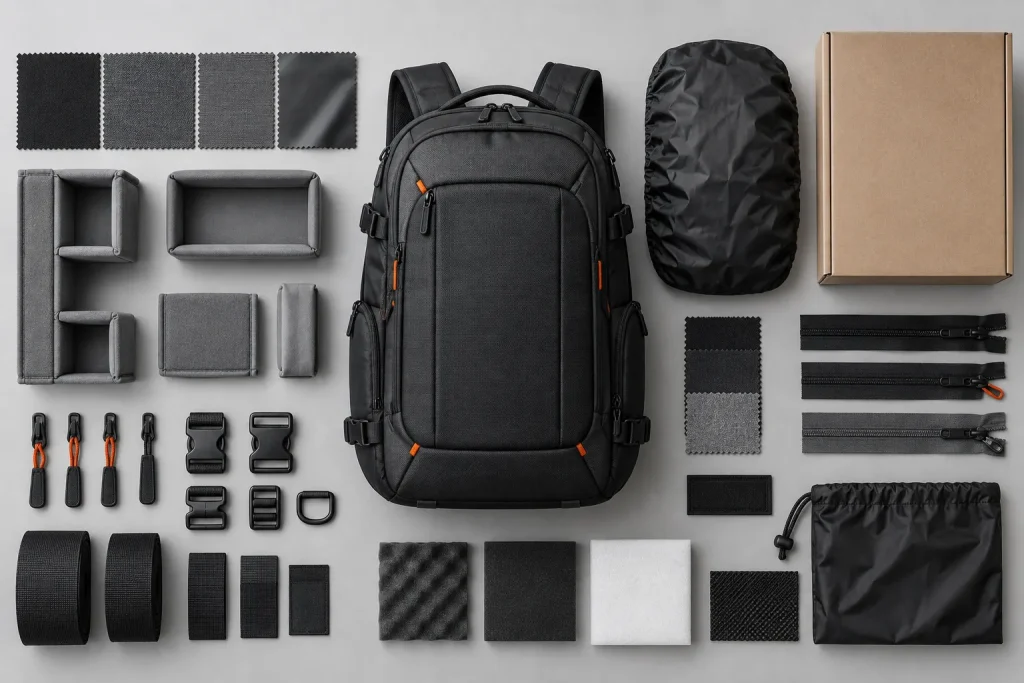
The fabric name alone is not enough for production. The material specification for a custom camera backpack should identify the fabric weight or denier, coating, backing, color standard and any required test method.
Custom colors may be subject to the material supplier’s minimum quantity. For an initial order, using available stock colors can reduce sourcing complexity and avoid unnecessary material commitments.
7. Review the Components Buyers Often Overlook
Small components can affect both customer reviews and production consistency.
Check the following during development:
-
Main and access zippers
-
Zipper pullers that are usable with gloves
-
Buckles and strap adjusters
-
Tripod straps and retention points
-
Divider hook-and-loop strength
-
Laptop sleeve padding
-
Base reinforcement
-
Carry handle attachment
-
Elastic pocket recovery
-
Webbing ends and strap management
-
Internal labels and care labels
Branded zippers, molded components and custom hardware may affect MOQ, tooling requirements and lead time. These details should be confirmed before the final quotation.
8. Decide Which Features Support the Sales Position
A multifunctional design does not need every possible feature. Each addition should solve a specific user problem.
Depending on the target market, useful options may include:
-
Modular padded dividers
-
Quick side access
-
Separate laptop storage
-
Tripod attachment
-
Trolley sleeve
-
Removable rain cover
-
Hidden passport pocket
-
Expandable personal-item section
-
Drone-compatible layout
-
Removable camera insert
-
Custom patches or modular attachment points
Before adding a feature, consider its effect on bag weight, sewing complexity, material consumption and ease of use. A focused product is usually easier to explain, sample and manufacture than a bag with several overlapping functions.
9. Prepare a Clear OEM Specification
A clear custom camera backpack specification helps the manufacturer understand the project, evaluate feasibility and identify the main material and cost drivers.
Include:
-
Reference photos, drawings or an existing sample
-
Target dimensions or equipment list
-
Expected order quantity
-
Target market and sales channel
-
Preferred outer and lining materials
-
Required access and compartment structure
-
Laptop and tripod requirements
-
Logo method and placement
-
Color quantity
-
Packaging requirements
-
Required tests or compliance documents
-
Delivery destination and target schedule
If some details are undecided, they can be reviewed during development. However, the intended user, basic structure and quantity should be clear before sample work begins.
10. Verify the Custom Camera Backpack Through Sampling

A camera backpack should not move directly from a visual concept to bulk production.
The sample should be checked for:
-
Internal fit with representative equipment
-
Divider stability
-
Protection at the base and corners
-
Zipper access when fully loaded
-
Shoulder and back-panel comfort
-
Strap adjustment range
-
Tripod balance
-
Laptop fit
-
Appearance and shape retention
-
Logo size and position
-
Workmanship at stress points
Any changes should be recorded in an updated specification or sample comment sheet. Final pricing and production details for a custom camera backpack should be based on the approved sample.
OEM Camera Backpack Development With Voufan Bags
Voufan Bags is an OEM/ODM custom bag manufacturer based in Shenzhen, China. Since 2008, we have supported brands, importers, wholesalers, distributors and private-label sellers with custom bag development, sampling, material sourcing, manufacturing and quality control.
We can review a camera backpack project from reference images, drawings, an existing sample or a product concept. Custom options may include materials, dimensions, compartment layouts, foam systems, colors, logos, accessories and packaging.
The MOQ for custom camera backpack projects starts from 500 pieces. The applicable MOQ depends on material availability, color quantity, hardware, logo method and construction.
Camera Backpack Sourcing FAQ
Can you develop a camera backpack from a reference product?
Yes. A new design can be evaluated from clear photos, measurements, drawings or a physical reference sample. Construction details and performance should be verified during sample development.
What information is needed for a preliminary quotation?
Please provide the expected quantity, dimensions or equipment list, preferred materials, compartment structure, logo method, packaging and delivery destination. If the specification is incomplete, the first quotation should be treated as preliminary.
Can the internal dividers be customized?
Yes. Divider quantity, dimensions, foam and attachment positions can be developed for the intended camera and lens configuration. The layout should be tested with representative equipment during sampling.
Can a camera backpack be described as waterproof?
That depends on the complete construction and the required test standard. Coated fabric alone does not make the entire bag waterproof. For many sewn camera backpacks, “water-resistant” is the more accurate claim unless finished-product testing confirms otherwise.
Can we use our own logo and packaging?
Logo size, placement and method can be customized. Common options depend on the fabric and design. Packaging can also be reviewed according to retail, e-commerce or distribution requirements.
What is the MOQ for a custom camera backpack?
MOQ starts from 500 pieces for custom camera backpack projects. Final requirements depend on fabrics, custom colors, components and the number of product variations.
Request an OEM Camera Backpack Review
Send us your reference images, equipment list, target quantity and required delivery market.
We will review the structure, material options and information needed for sampling and quotation.